









Browse Our Latest Articles From Category: Design and Stay Up to Date with new thing

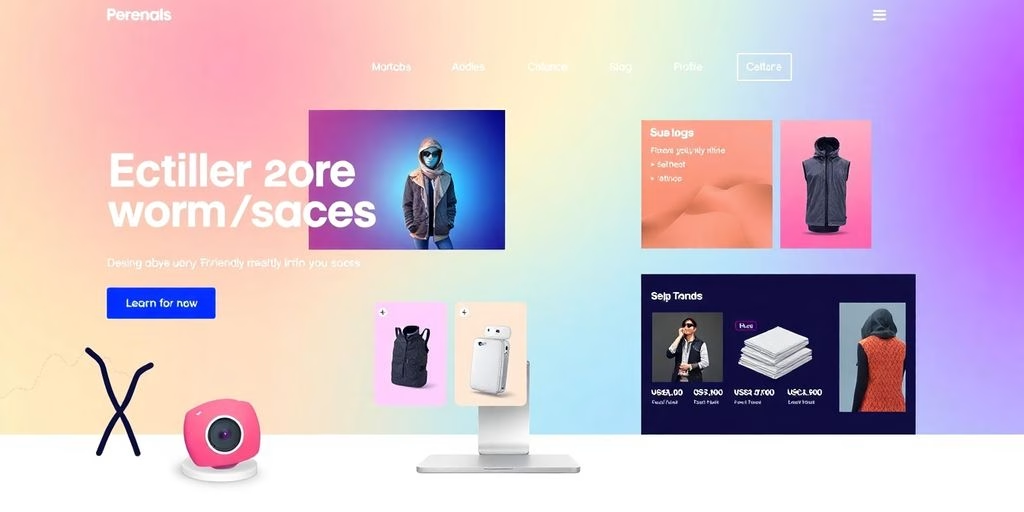
Modern e-commerce website layout with vibrant design elements.
E-Commerce
andre

Mastering Website Ecommerce Design: Essential Strategies for 2025 Success

As we step into 2025, the landscape of website ecommerce design continues to evolve at a rapid pace. To thrive in this competitive environment, businesses must focus on creating user-friendly, visually appealing, and technologically advanced online stores. This article will explore essential strategies that can help you master ecommerce design, ensuring not only a seamless shopping experience for your customers but also increased conversions and brand loyalty.   Key Takeaways User-centred design is vital for improving customer satisfaction and retention. Consistency in design across all devices enhances user trust and brand recognition. Integrating AI and AR can significantly boost user engagement and sales. Streamlined navigation and checkout processes are crucial for reducing cart abandonment rates. Staying updated with future trends like voice commerce and sustainable design will keep your ecommerce site competitive.   Fundamental Principles of Website Ecommerce Design When setting up an online shop, it’s easy to get caught up in fancy features and forget the basics. But honestly, nailing the core principles is what separates a successful site from one that’s just… there. Focusing on these fundamentals will set you up for long-term success.   User-Centred Design Think about it: who’s actually using your site? It’s not about what you like, it’s about what your customers need. That means understanding their preferences, pain points, and what makes them tick. Conduct user research. Create user personas. Map out customer journeys. By putting the user first, you’re more likely to create a site that people actually enjoy using, and that boosts conversion rates. It’s a win-win.   Consistency Across Platforms Imagine walking into a shop where the layout changes every time you visit. Annoying, right? Same goes for your website. Whether someone’s on a desktop, tablet, or phone, the experience should be consistent. Use a responsive design. Maintain a consistent brand identity. Ensure navigation is the same across all devices. Consistency builds trust. If your site looks and feels the same no matter where someone accesses it, they’re more likely to stick around and make a purchase. Plus, it just looks more professional.   A/B Testing and Iterative Design Don’t just set it and forget it. The best websites are constantly evolving. A/B testing lets you try out different versions of a page to see what performs best. Maybe a different button colour increases clicks, or a new headline grabs more attention. Test different design elements. Analyse user behaviour. Make data-driven decisions. By continually testing and refining, you can improve your website’s performance over time. It’s all about making small changes that add up to big results.   Enhancing User Experience Through Visual Design Visual design is more than just making things look pretty; it’s about crafting an experience that guides users and makes them want to stick around. Think of it as the silent salesperson, working 24/7 to convince visitors that your site is worth their time and money. It’s about creating an intuitive and engaging environment.   Importance of High-Quality Imagery Let’s be honest, blurry or low-resolution images scream ‘unprofessional’. High-quality images are essential for showcasing your products and building trust. People want to see what they’re buying, and they want to see it in detail. It’s not just about aesthetics; it’s about providing information and reassurance. Think about using 360-degree views or zoom functions to really let customers get a feel for the product. This is especially important for products like clothing or furniture, where texture and detail matter. Good images can also help to reduce returns, as customers have a clearer idea of what to expect. Make sure your images are optimised for web use, though – nobody wants to wait an age for a picture to load. You can build your online store with high quality images to attract more customers.   Colour Theory and User Behaviour Colours aren’t just colours; they’re emotional triggers. Different colours evoke different feelings, and understanding this can be a powerful tool. For example, blue often conveys trust and security, while red can create a sense of urgency. Think carefully about your target audience and the message you want to send. A playful, vibrant colour scheme might work well for a children’s clothing store, but it would probably be a disaster for a financial services website. It’s also important to consider cultural differences – colours can have different meanings in different parts of the world. A/B testing different colour schemes can be a great way to see what resonates best with your audience. You can customise your store with the right colour to attract more customers.   Typography and Readability Ever landed on a website where the text is so small or the font so fancy that you can barely read it? It’s incredibly frustrating, right? Typography is about more than just choosing a nice-looking font; it’s about making your content accessible and easy to read. Choose fonts that are clear and legible, and pay attention to things like font size, line height, and contrast. A good rule of thumb is to use a maximum of three different fonts on your website – any more than that and it can start to look cluttered and unprofessional. Also, think about using headings and subheadings to break up large blocks of text and make it easier for users to scan the page. Remember, people are busy, and they want to find the information they need quickly and easily. You can persuade design techniques with the right typography to attract more customers. Visual design is not just about aesthetics; it’s about creating a user-friendly and engaging experience that drives conversions. By paying attention to things like imagery, colour theory, and typography, you can create a website that not only looks great but also helps you achieve your business goals.   Integrating Technology for Improved Ecommerce Functionality Right, let’s talk tech. It’s not just about having a website anymore; it’s about making that website work for you, and more importantly, for your customers. We’re talking about tech that actually makes a difference, not

Read More »
Modern e-commerce website design template displayed on a laptop.
Design
andre

Elevate Your Online Presence with the Best E Commerce Website Design Template

In today’s competitive online marketplace, having a standout website is more important than ever. An effective e-commerce website design template can make all the difference in attracting customers and driving sales. With a plethora of options available, it’s essential to choose a template that not only looks great but also enhances the user experience. This guide will help you navigate the key aspects of selecting the best e-commerce website design template for your business needs. Key Takeaways Choose a template that prioritises user experience and ease of navigation. Ensure the design is responsive, so it works well on all devices. Look for customisation options to reflect your brand identity. Select templates that are optimised for search engines to improve visibility. Consider future trends like AI and sustainability when making your choice. Key Principles of E-Commerce Website Design So, you’re diving into the world of e-commerce? Ace! Picking the right template is just the start. Loads of things go into making a site that not only looks the part but also gets those sales rolling in. Let’s have a look at some key principles. User Experience Considerations Honestly, if your site’s a pain to use, people will just bounce. The user experience (UX) is paramount. Think about it: clear navigation, easy-to-find products, and a checkout that doesn’t make you want to throw your laptop out the window. It’s all about making it dead simple for customers to find what they want and buy it. No one wants to spend ages trying to figure out how to add something to their basket. Make sure your online ordering is smooth and intuitive. Visual Aesthetics and Branding Your website is basically your shop window, so it needs to look good and scream your brand. Use colours, fonts, and images that match your brand’s vibe. Keep it consistent across the whole site. This helps people recognise you and builds trust. Think of it like this: if your shop on the high street looks amazing, your website should too. It’s all part of creating a strong brand reputation. Functionality and Performance Looks aren’t everything, though. Your site needs to work. Fast loading times are a must – no one’s got the patience to wait around for ages. Make sure your search function actually finds stuff, and that all the buttons and links do what they’re supposed to. A glitchy site just looks unprofessional and will send people running. Plus, make sure your site is optimised for mobile. Loads of people shop on their phones these days, so if your site looks rubbish on a mobile, you’re missing out. You need to ensure your site is performing well, and that includes things like SEO best practises. Basically, your e-commerce site needs to be a well-oiled machine. It needs to look good, be easy to use, and actually work properly. Get these things right, and you’re well on your way to e-commerce success. Choosing the Right E-Commerce Website Design Template Okay, so you’re setting up shop online. That’s brilliant! But where do you even begin with the website? Well, picking the right e-commerce website design template is a massive first step. It’s not just about looks; it’s about how your shop functions and how customers experience your brand. Importance of Customisation Think of a template as a starting point, not the finish line. You wouldn’t wear a suit straight off the rack without tailoring it, would you? Same goes for your website. It needs to reflect your brand, not just the template designer’s idea of a good shop. Customisation lets you add your logo, tweak the colours, and generally make it feel like home for your customers. You can find top free website templates that offer a good base for customization. Responsive Design Features Right, listen up: if your website doesn’t look good on a phone, you’re losing sales. Simple as that. A responsive design automatically adjusts to fit whatever screen it’s being viewed on – phone, tablet, desktop, you name it. These days, loads of people shop on their phones while they’re on the bus or waiting in line, so this is non-negotiable. Here’s what to look for: Fluid grids that resize automatically. Flexible images that don’t break the layout. Media queries that adapt the design based on screen size. SEO Optimisation What’s the point of having a great-looking website if nobody can find it? That’s where SEO comes in. Your template needs to be built with search engines in mind. This means clean code, fast loading speeds, and the ability to easily add meta descriptions and alt text to your images. Think of it as laying the groundwork for Shopify store to be found on Google. Choosing a template that’s already SEO-friendly will save you a tonne of hassle down the line. Look for templates that are known for their clean code and fast loading times. It’s a small detail that can make a big difference. Top E-Commerce Website Templates for Various Business Types Choosing the right e-commerce template can really make or break your online shop. Different businesses have different needs, and the design should reflect that to pull in and keep customers. Let’s look at some top templates for different sectors. Templates for Fashion Retailers Fashion retailers need templates that are visually appealing and showcase their products in the best light. The design should be clean, modern, and easy to navigate. Think big, high-quality images and a layout that lets the clothes do the talking. A good template will also have features like zoom options, multiple product views, and easy size selection. It’s all about creating a virtual boutique experience. You might want to consider a Shopify store for its customisation options. Templates for Electronics Stores Electronics stores often have a lot of technical details to convey, so the template needs to be organised and informative. Clarity is key here. Think clear product descriptions, detailed specifications, and customer reviews. A good template will also have features like comparison charts, video demos, and easy-to-find

Read More »
Modern workspace with design tools and color palettes.
Design
andre

Mastering UI UX Design Principles: Essential Guidelines for Every Designer

UI UX design principles are essential for creating engaging and effective user experiences. By understanding these principles, designers can build interfaces that are not only visually appealing but also user-friendly. This article explores the key guidelines every designer should follow to master the art of UI UX design. Key Takeaways Keep designs simple to help users navigate easily. Focus on user needs to create satisfying experiences. Ensure consistency in design elements for better recognition. Make designs accessible for all users, including those with disabilities. Provide clear feedback to help users understand their actions. Understanding the Core UI UX Design Principles The Importance of Simplicity in Design Simplicity is key in UI UX design. Keeping designs simple helps users navigate easily and complete tasks without confusion. Here are some points to consider: Use clear and straightforward language. Limit the number of choices to avoid overwhelming users. Ensure that the layout is uncluttered and intuitive. User-Centered Design Approach At the heart of UI UX design is the user. A user-centered approach means: Understanding user needs and preferences. Designing solutions that cater to those needs. Testing designs with real users to gather feedback. Consistency Across Platforms Consistency is crucial for a seamless user experience. When users encounter familiar elements, they can navigate more easily. Here are some ways to maintain consistency: Use the same colors and fonts across all platforms. Ensure that buttons and icons function similarly everywhere. Create a style guide to keep design elements uniform. Consistency in design not only enhances usability but also builds trust with users, making them feel more comfortable with your product. In summary, focusing on simplicity, a user-centered approach, and consistency are essential principles for effective UI UX design. These principles help create a positive experience for users, leading to greater satisfaction and engagement. Enhancing User Experience Through Accessibility Designing for All Users Creating designs that everyone can use is essential. This means considering people with different abilities, including those with visual, auditory, or movement challenges. Here are some key points to remember: Use high contrast colors to help users with visual impairments. Include text-to-speech features for those who may struggle to read. Make sure buttons and links are easy to click for users with movement difficulties. Implementing Accessibility Features To ensure your design is accessible, consider these features: Alternative text for images so screen readers can describe them. Resizable text options to help users adjust the size for better readability. Keyboard navigation to allow users to move through your site without a mouse. Feature Description Alternative Text Describes images for screen readers. Resizable Text Allows users to change text size. Keyboard Navigation Enables navigation without a mouse. Accessibility is not just a feature; it’s a necessity. Designing for all users ensures that everyone can enjoy and benefit from your product. The Role of Feedback in Accessible Design Feedback is crucial in making designs accessible. It helps users understand what is happening as they interact with your product. Here are some ways to provide effective feedback: Use clear messages to inform users when actions are successful or if there are errors. Provide visual cues, like changing colors or animations, to indicate changes in state. Ensure that feedback is timely and relevant to the user’s actions, enhancing their overall experience. By focusing on these aspects, designers can create a more inclusive environment that welcomes all users, making the digital world a better place for everyone. The Role of Feedback and Efficiency in UI UX Design Providing Clear User Feedback Feedback is essential in UI/UX design. It helps users understand the results of their actions. Here are some ways to provide effective feedback: Visual cues: Use colors or icons to indicate success or failure. Sound effects: Simple sounds can confirm actions, like a click or notification. Animations: Small animations can show that a task is processing. Designing for Efficiency Efficiency in design means making it easy for users to complete their tasks quickly. Here are some tips to enhance efficiency: Streamline processes: Reduce the number of steps needed to complete a task. Optimize layouts: Arrange elements logically to minimize confusion. Use shortcuts: Provide keyboard shortcuts for advanced users. Balancing Feedback and User Control It’s important to find a balance between giving feedback and allowing users to control their experience. Here are some key points: Users should feel in charge of their actions. Provide options to undo actions easily. Allow users to customize feedback settings to suit their preferences. In UI/UX design, efficiency and feedback are crucial for creating a positive user experience. By focusing on these elements, designers can help users navigate their tasks with ease and satisfaction. In summary, effective feedback and efficient design are vital for a successful user experience. By implementing these principles, designers can create interfaces that are not only functional but also enjoyable to use. Remember, one of the main goals of a UI/UX design company is to reduce the cognitive load on users, making it easier for them to make decisions and interact with a product.  Applying Usability and Error Prevention Techniques Principles of Usability in Design Usability is all about how easy it is for users to interact with a product. Good usability means users can achieve their goals without confusion. Here are some key components: Learnability: How quickly can new users understand how to use the product? Efficiency: Can users complete tasks quickly? Memorability: Is it easy for users to remember how to use the product after a break? Error Prevention Strategies Preventing errors is crucial in design. Instead of just fixing mistakes, we should aim to stop them from happening in the first place. Here are some strategies: Form Validation: Check user input in real-time to catch mistakes early. Clear Instructions: Provide simple, clear guidance to help users avoid errors. Confirmation Messages: Ask users to confirm important actions to prevent accidental mistakes. Enhancing User Satisfaction User satisfaction is key to a successful design. Here are some ways to enhance it: Feedback: Provide immediate feedback when users take

Read More »
Designer working on modern UI UX in a creative workspace. ui ux design roadmap
Design
andre

Mastering the UI UX Design Roadmap: Your Comprehensive Guide to Success in 2024

As we dive into the world of UI UX design in 2024, it’s essential to understand the roadmap that will guide you to success. This comprehensive guide will explore the core elements of UI UX design, the skills you need to develop, and the latest trends shaping the industry. Whether you’re a beginner or looking to enhance your skills, this roadmap will help you navigate your journey in UI UX design effectively. Key Takeaways Understanding the difference between UI and UX design is crucial for creating user-friendly products. A successful UI UX design roadmap includes essential skills like design principles, user psychology, and tool proficiency. Staying updated with the latest design trends such as dark mode and 3D graphics is important for relevance in the field. Building a strong portfolio that showcases a variety of projects and your design process is vital for attracting potential clients. Networking and continuous education through online courses and design communities can significantly enhance your career prospects. Understanding the UI UX Design Roadmap Defining UI and UX Design UI (User Interface) and UX (User Experience) design are two important areas in creating digital products. UI focuses on how a product looks, including colors, buttons, and layouts. In contrast, UX is about how a user feels when using a product, ensuring it is easy and enjoyable to navigate. Understanding these differences is crucial for any aspiring designer. The Importance of a Design Roadmap A design roadmap is essential for guiding your journey in UI/UX design. It helps you plan your learning and career steps effectively. Here are some key reasons why having a roadmap is important: Clarity: It provides a clear path to follow. Focus: Helps you concentrate on what skills to develop. Progress Tracking: You can measure your growth over time. Key Components of a Successful Roadmap To create a successful UI/UX design roadmap, consider including these components: Skill Development: Identify the skills you need to learn, such as design principles and tools. Project Experience: Work on real projects to build your portfolio. Networking: Connect with other designers and professionals in the field. A well-structured roadmap can make the difference between success and confusion in your design career. By understanding the UI/UX design roadmap, you can better prepare yourself for a successful career in this exciting field. Remember, the journey may be challenging, but with the right guidance, you can achieve your goals! Essential Skills for UI UX Designers in 2024 Mastering Design Principles To create effective designs, understanding design principles is crucial. These principles guide designers in making choices that enhance user experience. Here are some key principles: Visual Hierarchy: Organizing elements to guide user attention. Simplicity: Keeping designs clean and straightforward. Consistency: Ensuring uniformity across all design elements. Understanding User Psychology A successful designer must grasp how users think and behave. This knowledge helps in creating designs that resonate with users. Key areas to focus on include: Emotional Design: Crafting experiences that evoke feelings. User Feedback: Incorporating user responses to improve designs. Accessibility: Making designs usable for everyone, including those with disabilities. Proficiency in Design Tools In 2024, being skilled in various design tools is essential. Here are some popular tools: Tool Description Figma Great for collaborative design and prototyping. Sketch Ideal for vector-based designs on macOS. Adobe XD Offers powerful features for UI/UX design. InVision Excellent for prototyping and user testing. Mastering these skills will not only enhance your design capabilities but also prepare you for the competitive landscape of UI/UX design in 2024. Stay ahead by continuously learning and adapting!  Latest Trends in UI UX Design Minimalist and Maximalist Design Approaches In 2024, the design world is seeing a blend of minimalism and maximalism. This means that while simplicity is key, designers are also adding bold elements to make interfaces stand out. This trend focuses on creating a balance between clean designs and impactful visuals. Clean lines and ample white space Strategic use of color and typography Engaging visuals that enhance usability Dark Mode and High Contrast Interfaces Dark mode has become a standard feature in many applications. It not only looks sleek but also helps users with visual impairments. Expect to see more designs that allow users to switch between light and dark modes easily. Improved readability in various lighting conditions Enhanced user comfort Aesthetic appeal that attracts users Integration of 3D Graphics and AR/VR The use of 3D graphics and augmented reality (AR) is changing how users interact with digital products. Designers are finding new ways to make experiences more immersive. In 2024, expect to see more applications using these technologies to engage users. Enhanced interactivity in apps More engaging e-commerce experiences Innovative educational tools that captivate users The future of UX design in 2024 is bright, with trends like advanced cursor interactions and personalized experiences shaping user experiences for success. Trend Description Minimalist Design Focus on simplicity with impactful visuals Dark Mode Standard feature for improved accessibility 3D Graphics and AR/VR Creating immersive and engaging user experiences By keeping an eye on these trends, designers can create user experiences that are not only functional but also visually appealing and engaging. Building a Strong UI UX Design Portfolio Showcasing a Variety of Projects To create a standout portfolio, it’s essential to include a diverse range of projects. Here are some tips: Include different styles: Show your ability to adapt to various design needs. Highlight different industries: This demonstrates your versatility. Focus on user needs: Tailor your projects to meet specific user requirements. Highlighting Your Design Process When presenting your work, it’s crucial to explain your design process. This should include: Research: Show how you gathered information. Wireframes: Include early sketches to illustrate your ideas. Prototyping: Share how you developed your designs into usable products. By detailing your process, you help potential employers understand your problem-solving skills and thought process. Focusing on Real-World Impact Your portfolio should also emphasize the impact of your designs. Consider these points: Use metrics: Show how your designs improved user experiences. Include testimonials:

Read More »
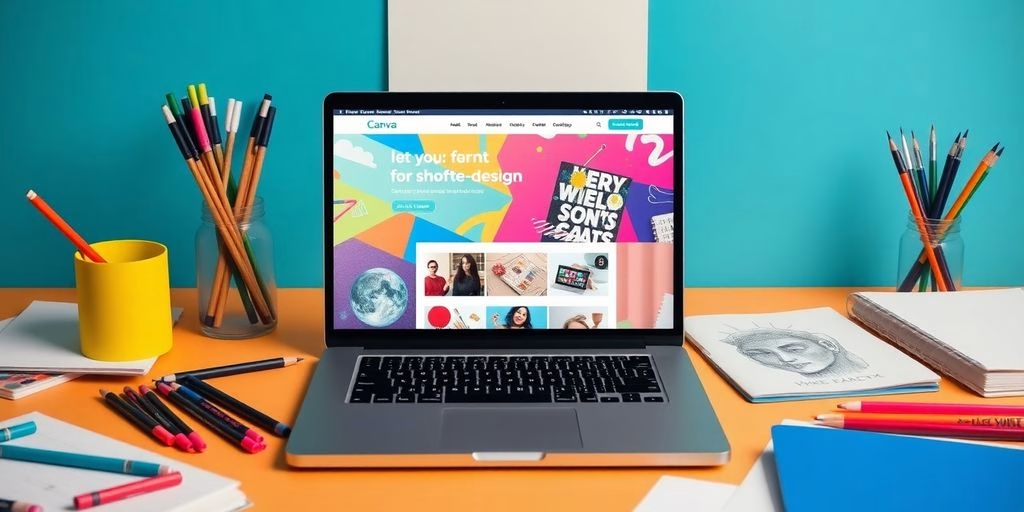
Colorful workspace with laptop displaying Canva design.
Design
andre

Transform Your Online Presence with Stunning Canva Website Design

In today’s digital world, having a great online presence is essential. One of the best ways to achieve this is through effective Canva website design. Canva is a user-friendly tool that allows anyone to create beautiful websites without needing advanced design skills. This article will guide you through the basics of Canva website design and how to make the most of this powerful platform. Key Takeaways Canva is easy to use, making website design simple for everyone. Choosing the right template can make your site more attractive and effective. Mobile-friendly designs are important for reaching more visitors. SEO strategies help your website get found on search engines. Collaboration tools in Canva allow teams to work together smoothly. Understanding the Basics of Canva Website Design Exploring Canva’s Interface Canva is a user-friendly design platform that allows you to create stunning websites. With countless templates and ideas, you can easily navigate through its features. The interface is designed for everyone, even if you have no design experience. Here are some key elements of the interface: Drag-and-drop functionality: Easily move elements around. Search bar: Quickly find templates and images. Design tools: Access various tools for editing and enhancing your designs. Key Features for Website Design Canva offers several features that make website design simple and effective. Some of the most important features include: Customizable templates: Choose from a wide range of templates that suit your style. Brand kits: Save your brand colors and fonts for consistency. Collaboration tools: Work with your team in real-time. Benefits of Using Canva for Websites Using Canva for your website design comes with many advantages. Here are a few: Cost-effective: Canva is free to use, making it accessible for everyone. Time-saving: Quickly create designs without starting from scratch. Versatile: You can design anything from social media posts to full websites. Canva is a powerful tool that can help you create a professional online presence without needing advanced skills. By understanding these basics, you can start your journey in creating a beautiful website with Canva! Creating a Visually Appealing Website with Canva Creating a visually appealing website is essential for attracting visitors and keeping them engaged. Canva offers a variety of tools and templates that make this process easier. Here are some key steps to consider: Choosing the Right Templates Start by exploring Canva’s extensive library of templates. Select a template that aligns with your brand’s style and message. Customize the template to fit your unique needs. Incorporating Brand Elements Use your brand colors consistently throughout the site. Include your logo in prominent places to enhance brand recognition. Choose fonts that reflect your brand’s personality. Enhancing Visuals with Canva Tools Utilize Canva’s image editing tools to improve photo quality. Add graphics and icons to make your content more engaging. Experiment with layouts to create a balanced and attractive design. A well-designed website can significantly impact how visitors perceive your brand. By following these steps, you can create a stunning website that not only looks great but also effectively communicates your message. For inspiration, check out 17 inspiring Canva website examples to fuel your web design creativity. Remember, a compelling website portfolio is crucial for professionals to showcase their expertise and attract opportunities. Focus on strategic planning and storytelling to make your site stand out! Optimizing Your Canva Website for User Experience Ensuring Mobile Responsiveness To make sure your website looks great on all devices, it’s important to check its mobile responsiveness. This means your site should adjust well on phones and tablets. Here are some tips to ensure this: Use Canva’s mobile preview feature to see how your design looks on smaller screens. Keep text and images clear and easy to read. Avoid using too many small buttons or links that are hard to click on mobile devices. Improving Navigation and Accessibility Good navigation is key for a great user experience. If visitors can’t find what they need, they might leave your site. Here are some ways to improve navigation: Use clear labels for your menu items. Include a search bar for easy access to content. Make sure all links are working and lead to the right pages. Utilizing Interactive Elements Adding interactive elements can make your website more engaging. Consider these options: Use buttons that change color when hovered over. Include forms for visitors to fill out, like contact forms or surveys. Add animations to draw attention to important sections. A well-designed website not only attracts visitors but also keeps them engaged. Focus on user experience to turn casual visitors into loyal customers. By following these tips, you can create a Canva website that is not only visually appealing but also user-friendly, ensuring that visitors have a positive experience while exploring your content. Remember, a website acts as a modern business card, showcasing your brand’s story and values, and enhancing conversions through optimized forms and engaging popups, attracting quality leads. Integrating SEO Strategies in Canva Website Design Incorporating Keywords Effectively To make your website easy to find, you need to use the right keywords. Here are some tips: Research popular keywords related to your content. Use these keywords in your titles, headings, and throughout your text. Avoid keyword stuffing; keep it natural and relevant. Optimizing Images and Media Images can help your website stand out, but they also need to be optimized for search engines. Here’s how: Use descriptive file names for your images. Add alt text to describe what’s in the image. Compress images to improve loading speed. Media Type Optimization Tip Images Use alt text Videos Add descriptions Audio Include transcripts Structuring Content for SEO The way you organize your content matters. Here are some key points: Use headings (H1, H2, H3) to break up your text. Keep paragraphs short and to the point. Include internal links to other pages on your site. Remember, SEO is an ongoing process. Regularly update your content to keep it fresh and relevant. This will help improve your website’s visibility and user experience. By following these strategies, you can

Read More »
A colorful creative workspace with design tools and supplies. How Canva AI Transforms Your Design Experience
Branding
andre

Unleashing Creativity: How Canva AI Transforms Your Design Experience

Canva AI is changing the way we think about design. With its smart tools and features, it helps everyone, from beginners to professional designers, create stunning visuals. This article explores how Canva AI makes design easier and more fun, allowing anyone to unleash their creativity. Key Takeaways Canva AI helps users create designs quickly and easily. It offers smart suggestions to improve design quality. Even beginners can make professional-looking graphics with Canva AI. Collaboration is made simple with real-time feedback features. Canva AI is shaping the future of design by making it accessible to everyone. The Evolution of Canva: Integrating AI for Enhanced Creativity From Basic Tools to AI-Powered Features Canva started as a simple design tool, but it has grown into a powerful platform. With the introduction of AI, users can now create stunning designs more easily than ever. The shift from basic features to intelligent tools has made a big difference in how people design. The Role of AI in Modern Design AI plays a crucial role in today’s design world. It helps users by: Suggesting layouts that fit their needs. Offering color palettes that work well together. Automating repetitive tasks, saving time. How Canva AI Stands Out in the Design World Canva AI is unique because it combines creativity with technology. It allows anyone, regardless of skill level, to create professional-looking designs. This blend of creativity and technology makes Canva a leader in the design space. Canva’s evolution shows how technology can enhance creativity, making design accessible to everyone. Exploring Canva AI’s Innovative Design Tools AI-Driven Templates and Layouts Canva AI offers a wide range of templates that are designed to make your projects easier. With just a few clicks, you can choose from various styles that fit your needs. These templates help you save time and ensure your designs look professional. Smart Design Suggestions with Canva AI One of the coolest features of Canva AI is its ability to provide smart design suggestions. It analyzes your work and gives you tips on how to improve it. Here are some benefits of using these suggestions: Helps you find the right colors Suggests fonts that match your style Offers layout ideas to enhance your design Enhancing Visual Appeal with AI-Powered Elements Canva AI also includes special elements that can make your designs pop. You can add graphics, icons, and images that are tailored to your project. For example, with the AI interior design feature, you can transform empty or furnished spaces into stunning interiors with Canva. Just upload a picture of your room, choose a design style, and reimagine your interior space. Canva AI tools are designed to make creativity accessible to everyone, regardless of their design skills. In summary, Canva AI’s innovative design tools are changing the way we create. They not only save time but also help you produce high-quality work effortlessly. Whether you’re making a presentation or designing a social media post, these tools can help you shine. For instance, you can create slides in seconds with the magical design tool for presentations, ensuring brand consistency and a polished look. Streamlining the Design Process with Canva AI Canva AI is changing how we design by making the process faster and easier. With AI, repetitive tasks can be automated, allowing designers to focus on creativity instead of mundane details. Automating Repetitive Tasks Quickly resize designs for different platforms. Automatically adjust colors and fonts to match your brand. Generate multiple design variations in seconds. Improving Workflow Efficiency Using Canva AI helps improve how teams work together. Here are some benefits: Instant feedback on designs from team members. Easy sharing of designs for collaboration. Access to a library of templates that save time. Real-Time Collaboration and Feedback Canva AI allows for real-time teamwork. This means: Everyone can see changes as they happen. Team members can leave comments directly on the design. It’s easier to make adjustments based on feedback. By using Canva AI, designers can create high-quality work while saving time and effort. This makes the design process smoother and more enjoyable for everyone involved. Canva AI for Non-Designers: Making Creativity Accessible User-Friendly Interface for Beginners Canva AI is designed to be easy for everyone, even if you have no design experience. The platform offers a simple layout that helps users navigate through various tools without feeling overwhelmed. This makes it possible for anyone to start creating right away. AI-Powered Guidance and Tips With Canva AI, users receive helpful suggestions as they design. This includes: Smart tips on color combinations Layout recommendations that fit your content Automatic adjustments to improve your design’s look These features ensure that even those without a design background can create stunning visuals. Canva AI acts like a personal assistant, guiding you through the design process. Creating Professional Designs Without Expertise Thanks to Canva AI, anyone can produce high-quality designs. Here are some ways it helps: Templates: Choose from thousands of ready-made templates that suit various needs. Brand Kit: Easily create on-brand images with AI by using your brand kit photos as a guide. Customization: Modify templates to fit your style without needing advanced skills. Canva AI truly opens the door for creativity, allowing non-designers to express themselves visually without the usual barriers. In summary, Canva AI makes design accessible to everyone, empowering users to create beautiful graphics with ease. Whether you’re a student, a small business owner, or just someone who loves to create, Canva AI is here to help you shine! The Impact of Canva AI on Professional Designers Elevating Design Quality with AI Canva AI is changing the way professional designers work. With its smart tools, designers can create stunning visuals faster than ever. This technology helps to enhance creativity by providing suggestions and automating tasks. Here are some ways Canva AI elevates design quality: Offers intelligent design suggestions Provides access to a wide range of templates Helps in color and font selection Balancing Creativity and Automation While automation is helpful, it’s important for designers to maintain their unique style.

Read More »
Benefits of Prototypes; Developer coding on laptop with coffee cup nearby.
Web Development
andre

The Role of Prototypes: Understanding 5 Benefits of Prototypes in Software Development

Prototyping is a crucial step in software development that allows teams to visualize and test their ideas before full-scale production. By creating a prototype, developers can identify issues, gather user feedback, and refine their designs, ultimately leading to better products. This article explores the concept of prototypes, their functions, and the benefits of prototypes they bring to the development process. Key Takeaways Prototyping helps visualize ideas, making them easier to understand and evaluate. It allows for user feedback, which can lead to improvements before final production. Prototypes can be physical or digital, providing flexibility in testing different concepts. Using prototypes can save time and money by identifying issues early in the development process. Effective prototyping fosters collaboration among team members, enhancing communication and creativity. Understanding the Concept of Prototype Definition of Prototype A prototype is an initial version of a product or design created to test and evaluate concepts, functions, and forms before mass production. It can be a physical or digital model that allows developers to see and feel the product before making further decisions. Prototypes are usually simpler and smaller than the final product. The main goal of creating a prototype is to identify weaknesses, make improvements, and gather user feedback before the final product is developed. Importance of Prototyping in Software Development Prototyping plays a crucial role in software development. It helps in: Testing concepts: Prototypes allow developers to test and validate product ideas before further development. Identifying issues: They help in spotting design flaws and functionality problems early on. User interaction: Prototypes enable users to interact with a model, providing valuable insights into their needs and preferences. Common Misconceptions About Prototypes Many people misunderstand what a prototype is. Here are some common misconceptions: Prototypes are final products. All prototypes are high-fidelity. Prototyping is a waste of time and resources. Prototyping is not just about creating a model; it’s about refining ideas and ensuring that the final product meets user needs effectively. In summary, understanding prototypes is essential for successful software development. They serve as a bridge between ideas and final products, allowing for testing, feedback, and improvement. Key Functions of Prototypes in Software Development Testing and Validation Prototypes play a crucial role in the testing and validation of ideas. They allow developers to create a working model of a product before full-scale production. This helps in identifying flaws early in the process, ensuring that the final product meets user needs effectively. User Feedback and Iteration One of the most significant functions of prototypes is to gather user feedback. By presenting a prototype to users, developers can receive valuable insights that guide further development. This iterative process helps refine the product based on real user experiences, making it more user-friendly and effective. Design and Functionality Exploration Prototypes enable teams to explore various design options and functionalities. They serve as a visual representation of ideas, allowing stakeholders to see and interact with the product concept. This exploration can lead to innovative solutions and improvements that might not have been considered otherwise. Prototyping is not just about creating a model; it’s about enhancing collaboration and communication among team members. In summary, the key functions of prototypes in software development include: Testing and validation of concepts Gathering user feedback for iterative improvements Exploring design and functionality options By leveraging these functions, teams can significantly improve the quality and success of their software products. Types of Prototypes and Their Applications Low-Fidelity Prototypes Low-fidelity prototypes are simple and inexpensive to create. They often consist of hand-drawn sketches or basic paper models. These prototypes are useful for testing basic concepts and user interactions. They allow for quick adjustments based on initial feedback. High-Fidelity Prototypes High-fidelity prototypes are more detailed and closely resemble the final product. They are often created using specialized design software. This type of prototype is essential for testing the look and feel of the product, as well as its functionality. They help in gathering more accurate user feedback and validating design choices. Digital vs. Physical Prototypes Digital prototypes are created using software tools and can simulate user interactions. They are great for software applications. Physical prototypes, on the other hand, are tangible models used in product design, such as 3D printed items. Both types serve different purposes and are crucial in their respective fields. Type of Prototype Description Application Area Low-Fidelity Simple sketches or paper models Early concept testing High-Fidelity Detailed digital models Final design validation Digital Software-based simulations Software development Physical Tangible models (e.g., 3D prints) Product design Prototyping is a vital step in the development process, allowing teams to visualize ideas and gather user feedback before full-scale production. By understanding the different types of prototypes, developers can choose the right approach for their projects, ensuring effective testing and validation of ideas. Benefits of Using Prototypes Cost Efficiency Creating a prototype may seem expensive at first, but it can actually save money in the long run. By testing ideas early, developers can avoid costly mistakes later in production. This means that the overall production costs can be significantly reduced. Improved Collaboration Prototypes serve as a great tool for team collaboration. They allow developers to present their ideas clearly to investors and potential users. This visual representation helps everyone understand the product better, leading to more effective discussions and feedback. Risk Mitigation Using prototypes helps in identifying potential issues before full-scale production begins. This can minimize the risk of product failure and financial loss. By addressing problems early, teams can ensure that the final product meets user needs and expectations. Prototyping is not just about creating a model; it’s about ensuring that the final product is functional and user-friendly. Summary of Benefits Benefit Description Cost Efficiency Reduces overall production costs by identifying issues early. Improved Collaboration Enhances communication among team members and stakeholders. Risk Mitigation Minimizes the chances of product failure and financial loss. Conclusion In summary, the benefits of using prototypes in software development are clear. They not only help in saving costs but also improve collaboration and

Read More »
7 Fresh Innovative Graphic Design Examples; Colorful graphic design elements in a creative collage.
Branding
andre

Elevate Your Designs: 7 Fresh Innovative Graphic Design Examples

Graphic design is a vibrant field that constantly evolves with new ideas and trends. Whether you’re a beginner or a seasoned designer, finding inspiration can help you create stunning visuals. In this article, we explore various innovative graphic design concepts to spark your creativity for your next project. Key Takeaways Typography is crucial in graphic design, helping to convey messages clearly. Social media graphics should be eye-catching and consistent with branding. Effective logo design is all about simplicity and memorability. Vector graphics allow for scalable and versatile designs. Minimalist design emphasizes clarity and focus on the essential elements. Exploring the Power of Typography in Graphic Design Typography is more than just choosing fonts; it’s about communicating messages effectively. The right typography can enhance the visual appeal of your design and convey the intended message clearly. The Role of Typography in Visual Communication Typography plays a crucial role in how information is perceived. It helps in: Creating a mood: Different fonts evoke different feelings. Enhancing readability: Clear fonts make it easier for the audience to understand the content. Establishing brand identity: Unique typography can set a brand apart. Stunning Examples of Typography in Branding Here are some brands that showcase the power of typography: The New York Times: Uses classic serif fonts to convey trust and authority. Apple Inc.: Minimalist sans-serif fonts reflect modernity and innovation. Coca-Cola: The iconic script font evokes nostalgia and happiness. Nike: Bold typography emphasizes strength and motivation. IBM: Clean and professional fonts represent reliability and technology. Tips for Choosing the Right Fonts for Your Project When selecting fonts, consider the following: Know your audience: Choose fonts that resonate with your target demographic. Match the tone: Ensure the font aligns with the message you want to convey. Limit your choices: Stick to two or three fonts to maintain consistency. Test readability: Make sure your text is easy to read at various sizes. Typography is a powerful tool in graphic design. It can transform a simple message into a compelling visual story that resonates with the audience. By understanding the importance of typography, you can elevate your graphic design projects and create impactful visuals that leave a lasting impression. Mastering Social Media Graphic Design In today’s digital world, mastering social media graphic design is crucial for creating eye-catching posts that grab your audience’s attention. Here are some key areas to focus on: Creating Eye-Catching Social Media Posts Use vibrant colors and bold fonts to make your posts stand out. Incorporate high-quality images that resonate with your brand. Keep your message clear and concise to engage viewers quickly. Utilizing Graphic Design Tools for Social Media Graphic design tools are essential for simplifying the design process. Here’s what they can do: Provide templates for quick designs. Offer pre-set color schemes to maintain brand consistency. Allow easy scheduling of posts across various platforms. Consistency in Branding Across Social Media Platforms To ensure your brand is easily recognizable, follow these tips: Use the same logo and color palette across all platforms. Maintain a consistent tone and style in your graphics. Regularly update your visuals to keep them fresh and engaging. Remember, a strong brand is like a promise to your audience – one that’s delivered through every post, pin, and tweet. By focusing on these elements, you can create social media graphics that not only attract attention but also build a loyal following. Mastering graphic design is not just about aesthetics; it’s about creating a visual identity that speaks to your audience. The Art of Effective Logo Design Principles of Successful Logo Design Creating a logo is more than just drawing a picture; it’s about crafting a visual identity that represents your brand. Here are some key principles: Simplicity: A simple logo is easier to recognize and remember. Versatility: Your logo should look good on various platforms, from business cards to billboards. Relevance: It should reflect your brand’s values and message. Case Studies of Iconic Logos Let’s look at some famous logos and what makes them effective: Logo Brand Key Feature Nike Swoosh Nike Simple and memorable Apple Apple Clean design with a strong story McDonald’s McDonald’s Bright colors and familiarity Tips for Designing a Memorable Logo To create a logo that stands out, consider these tips: Focus on your audience: Understand who you are designing for. Use color wisely: Colors evoke emotions and can influence perception. Get feedback: Show your designs to others and be open to suggestions. A well-designed logo is not just an image; it’s a representation of your brand’s identity and values. It should resonate with your audience and leave a lasting impression. By following these principles and tips, you can create a logo that not only looks good but also effectively communicates your brand’s message. Remember, a logo is a crucial part of developing a unique brand identity that can lead to business success. Innovative Approaches to Vector Graphic Design Benefits of Using Vector Graphics Vector graphics are essential in graphic design due to their scalability and precision. Here are some key benefits: Scalability: Vector images can be resized without losing quality. Editability: They are easy to modify, allowing for quick adjustments. File Size: Generally, vector files are smaller than raster images, making them easier to share. Techniques for Creating Scalable Artwork To create effective vector graphics, consider these techniques: Use the Pen Tool: Mastering the pen tool is crucial for creating smooth curves and lines. Layering: Organize your artwork in layers for better control and editing. Color Management: Use a limited color palette to maintain visual harmony. Examples of Vector Graphics in Modern Design Here are some notable examples of vector graphics: Logos: Many brands use vector logos for their versatility. Illustrations: Vector illustrations are popular in digital media for their clean lines. Infographics: They are often created using vector graphics to ensure clarity and scalability. Remember, vector graphics are not just about aesthetics; they are a powerful tool for creating designs that are both functional and visually appealing. Explore the latest articles in graphic

Read More »
Visual identity - identitas visual
Design
andre

Creating a Powerful Visual Identity: A Step-by-Step Guide

In a marketplace saturated with competition, a robust visual identity is not just a nicety but a necessity for any brand aiming to stand out. Crafting a powerful visual identity involves a strategic approach that encompasses the brand’s core values and communicates them effectively through visual elements. From logos to color schemes and typography, each component must work in harmony to create a memorable and cohesive brand experience. This step-by-step guide provides a roadmap for creating a visual identity that not only captures the essence of your brand but also resonates with your target audience.   Key Takeaways A strong visual identity is strategically crafted to align with a brand’s personality, values, and mission, ensuring a consistent message. Key steps include understanding brand influence on visuals, developing a visual direction, and creating a documented visual identity guide. Designing a memorable logo, choosing an appropriate color palette, and selecting typography are foundational steps in building a visual identity. Establishing brand guidelines is crucial for maintaining consistency across all branding materials and touchpoints. A visual identity should evolve over time, incorporating feedback and analytics while balancing tradition with current trends.   The Anatomy of Visual Identity The Essence of Brand Personality Unveiling the core of a brand’s personality is like a first date; you want to put your best foot forward. It’s the unique quirks, the ethos, and the values that make your brand relatable and memorable. Think of it as the soul of your company, expressed through every visual cue and interaction.   Choosing Your Palette A well-chosen color palette is like the perfect background music—it sets the mood without saying a word. Colors convey emotions and associations, so selecting the right hues is crucial for resonating with your audience. Bold choices can make bold statements, but harmony is key.   The Silent Ambassador of Your Brand Typography is not just about readability; it’s about character. The fonts you choose whisper tales about your brand’s personality. Serif or sans-serif, each typeface has its own secret language that speaks volumes before the first word is read.   Crafting a Visual Vocabulary The images and graphics you select are the visual shorthand for your brand’s narrative. They’re the illustrations in the storybook of your business, providing context and clarity. A consistent visual vocabulary ensures your brand’s story is told coherently across all mediums.   Crafting an Emblem of Excellence The Makings of a Memorable Logo Creating a logo that sticks in the mind is an art form. It’s the distillation of your brand’s essence into a single graphic—a task that demands creativity, strategic thinking, and a deep understanding of your brand’s core values. A memorable logo is the cornerstone of your visual identity, a beacon that shines across all mediums and platforms.   Balancing Simplicity and Complexity In the world of logos, less is often more. A simple design ensures recognition and recall, but it’s the subtle complexities that give it depth and meaning. Striking this balance is crucial; it’s about creating a logo that’s both scalable and packed with personality, one that can grow and evolve with your brand.   Logo Variations for Different Contexts Your logo needs to be a chameleon, adaptable to a variety of contexts without losing its identity. From monochrome to full color, from billboards to business cards, ensuring your logo can transition seamlessly between formats is a testament to thoughtful design. This adaptability extends to different cultural contexts, making your logo a global ambassador for your brand.   Testing and Refining Your Logo Design The journey to the perfect logo is iterative. It involves sketching, prototyping, and testing across a range of applications. Gathering feedback is essential, as it provides insights that refine and perfect the design. Remember, your logo is not just for today—it’s a legacy that will represent your brand for years to come. Logo design principles emphasize simplicity, versatility, and consistency. Iterative refinement, attention to detail, and scalability are key for creating memorable logos that resonate with audiences. A well-designed logo is more than just an attractive design; it encapsulates your brand identity and values in a visual form that resonates with your audience.   Establishing Your Brand Guidelines Embarking on the journey to create a brand style guide is like charting a course through the cosmos of consistency. It’s the stellar map that ensures every visual element orbits around your brand’s core identity. A brand style guide is not just a document; it’s a manifesto that articulates the gravitational pull of your visual elements, from logos to color palettes, ensuring they all move in harmonious synchrony.   The Blueprint of Brand Consistency Imagine your brand as a constellation in the night sky. Without a blueprint, the stars would scatter, and your brand’s light would dim. A style guide serves as the constellation’s outline, connecting the dots to form a recognizable pattern. It’s a comprehensive manual that details the dos and don’ts, the when and hows, and the exact hex codes and typography to be used across all platforms.   Decoding the Dos and Don’ts Navigating the dos and don’ts within your brand guidelines is akin to understanding an alien language. But fear not, Earthling! With clear instructions and visual examples, your team can avoid the black holes of branding blunders. This section of your guide will be the Rosetta Stone for your brand’s visual communication, providing clarity and direction.   Guidelines for the Digital Age In the digital age, your brand must shine across various screens and interfaces. Your style guide must adapt to the ever-changing landscape of digital design, ensuring your brand’s visual identity remains cohesive whether it’s viewed on a smartphone or a billboard in Times Square.   Educating Your Team on Brand Guidelines Lastly, the success of your brand guidelines hinges on your team’s understanding and adherence to them. It’s crucial to educate your crew on the importance of these guidelines, turning them into brand ambassadors who navigate the visual universe with confidence and consistency. In summary, your brand

Read More »
What is web designer - apa itu web desainer
Web Design
andre

Why Web Designer is Important

The internet is like a vast city with countless websites as its buildings. Ever wondered how these websites are created? Web designers and web developers do that! It’s all thanks to the awesome world of web design and development! In this easy-to-understand guide, we’ll explore the basics of web design and development to help you unravel the mysteries behind the websites you visit every day.   Key Takeaways Web designers are responsible for creating the look and feel of websites, including layout, colors, fonts, and images. Web developers build the structure and functionality of websites, using programming languages like HTML, CSS, and JavaScript. Web designers and developers need a range of skills, including creativity, technical knowledge, and problem-solving abilities. User experience (UX) design is an important aspect of web design, focusing on creating engaging and user-friendly experiences for website visitors. Continuous learning and staying up-to-date with design trends are essential for web designers and developers to stay ahead in the industry.   The Art of Web Design Understanding the Role of a Web Designer Web design is like decorating and arranging the furniture inside a house. It’s all about making the website look good and easy to use. Just like arranging a room, web designers decide where to put things on a webpage to ensure it looks organized and not too crowded. They also pick colors and fonts that match the website’s personality. A fun website might use bright colors and playful fonts, while a serious one might stick to more neutral tones and formal fonts. Web designers are the ones who choose images and graphics to make the site interesting and engaging.   The Evolution of Web Design Web design has come a long way since the early days of the internet. Back in the day, websites were simple and static, with basic HTML and limited functionality. But as technology advanced and user expectations grew, web design evolved into a dynamic and interactive art form. Today, web designers have a wide range of tools and technologies at their disposal to create stunning and user-friendly websites. From responsive design that adapts to different devices, to content management systems that make updates a breeze, web design has become a complex and exciting field.   The Skills Every Web Designer Should Have When it comes to web design, having the right skills is crucial for success. Here are some essential skills that every web designer should possess: HTML: HTML is the foundation of every website. It’s like the skeleton that holds everything together. Web designers use HTML to structure the content and layout of a webpage. CSS: CSS is like the clothes the website wears. It styles the HTML elements, making them look pretty. Web designers use CSS to change colors, fonts, and layout. JavaScript: If HTML is the skeleton and CSS is the clothes, then JavaScript is the magic that makes things happen. It adds interactivity to a website, like pop-ups, animations, and cool features. Responsive Design: With the increasing use of mobile devices, responsive design has become essential. Web designers need to ensure that websites look and function well on different screen sizes. Having a strong foundation in these skills will enable web designers to create visually appealing and user-friendly websites that meet the needs of their clients.   Crafting User-Friendly Websites Creating Engaging User Experiences In the ever-evolving landscape of digital experiences, user interface (UI) design plays a pivotal role in creating engaging and user-friendly applications and websites. By optimizing navigation and usability, integrating interactive elements, and building trust and credibility, web designers can create remarkable user interfaces that captivate and delight users. But how can you ensure that your designs are truly engaging? Here are some key principles to keep in mind: Optimizing navigation and usability: Make it easy for users to navigate your website or application by organizing content logically and providing clear calls to action. Integrating interactive elements: Incorporate interactive features like animations, hover effects, and microinteractions to make the user experience more dynamic and engaging. Building trust and credibility: Use visual cues, such as professional branding and testimonials, to establish trust and credibility with your users. Remember, practice makes perfect, so embrace challenges, seek feedback, and enjoy the process of bringing your design ideas to life. Happy designing!     The Importance of Responsive Design In the era of multiple devices and screen sizes, responsive design is paramount. It ensures that your website adapts seamlessly to different screen sizes, providing a consistent and enjoyable experience across devices. With the increasing use of smartphones and tablets, it’s crucial to prioritize responsive design to reach a wider audience and keep them engaged. Responsive design also improves user experience, as it allows for optimal viewing and interaction on any device. By implementing responsive design, you can enhance your website’s accessibility and usability, making it easier for users to navigate and find the information they need.   Optimizing Website Performance Optimizing website performance is crucial for ensuring a smooth user experience and maximizing conversions. To achieve this, web designers should prioritize the following strategies: Optimize for mobile users: With the increasing use of smartphones and tablets, it’s essential to design websites that are mobile-friendly. This includes responsive design and optimizing page load speed. Implement SEO strategies: Search engine optimization is key to driving organic traffic to your website. Focus on keyword research, meta tags, and optimizing content for search engines. Create engaging and shareable content: Content plays a vital role in attracting and retaining visitors. Make sure your content is relevant, answers questions, and is easy to read. Encourage social sharing to increase your website’s visibility. By implementing these strategies, web designers can create high-performing websites that deliver a seamless user experience and drive conversions.   Collaboration and Communication Working with Clients and Stakeholders When working with clients and stakeholders, collaboration and effective communication are key. Including essential players in the development of the design strategy, such as designers, developers, marketers, and business leaders, ensures that the plan

Read More »

© 2022 Cerberus Works