













Browse Our Latest Articles From Category: Lead Generation and Stay Up to Date with new thing

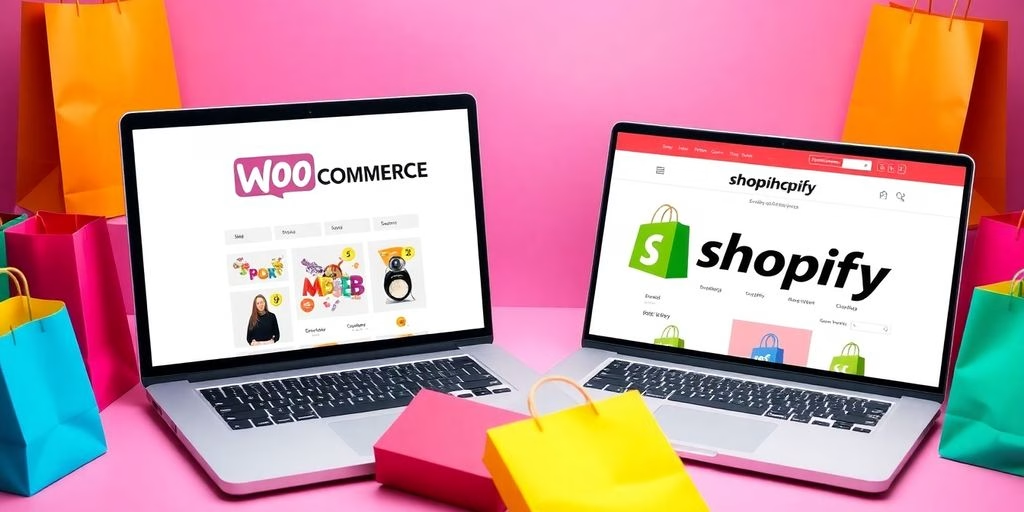
WooCommerce vs Shopify: Unveiling the Best E-commerce Platform for Your Business in 2024 | Laptop with WooCommerce and Shopify store images.
Conversion Rate Optimization
andre

WooCommerce vs Shopify: Unveiling the Best E-commerce Platform for Your Business in 2024

WooCommerce vs Shopify: In the world of online shopping, choosing the right platform can make a big difference for your business. Two of the most popular options are WooCommerce and Shopify. This article will explore their features, costs, and more to help you decide which one is the best fit for you in 2024. Key Takeaways WooCommerce is a plugin for WordPress, while Shopify is a standalone platform. Shopify offers easier setup for beginners, but WooCommerce provides more customization options. Both platforms have different pricing plans, so it’s important to understand the costs involved. WooCommerce allows for more flexibility with design, while Shopify has many built-in templates. Customer support varies, with Shopify offering 24/7 support and WooCommerce relying on community forums. Overview of WooCommerce vs Shopify   Key Features of WooCommerce WooCommerce is a powerful plugin for WordPress that allows you to turn your website into a full-fledged online store. Here are some of its key features: Open-source: You can customize it as much as you want. Wide range of extensions: Add functionalities like payment gateways and shipping options. Strong community support: Many resources are available for help. Key Features of Shopify Shopify is a dedicated e-commerce platform that is user-friendly and designed for businesses of all sizes. Its main features include: Hosted solution: No need to worry about hosting or security. Easy to use: Set up your store quickly without technical skills. Mobile-friendly: Your store looks great on all devices. Market Position and Popularity Both platforms have a strong presence in the e-commerce market. Here’s a quick comparison: Platform Market Share Popularity Rank WooCommerce 29% 1 Shopify 23% 2 In 2024, Shopify is often seen as more affordable than WooCommerce when considering all costs. This makes it a popular choice for many new businesses. In the world of e-commerce, choosing the right platform can make a big difference in your success. Overall, both WooCommerce and Shopify have their strengths, and the best choice depends on your specific business needs. Pricing Structures and Costs WooCommerce Pricing Breakdown WooCommerce is a free plugin for WordPress, but there are costs involved. Here are some key points to consider: Hosting Fees: You need to pay for web hosting, which can range from $5 to $50 per month. Domain Name: A domain name typically costs around $10 to $20 per year. Extensions and Themes: While WooCommerce is free, many extensions and themes can cost anywhere from $30 to $300 each. Shopify Pricing Breakdown Shopify offers several pricing plans: Plan Monthly Cost Features Included Basic $39 Online store, 2 staff accounts Shopify $105 Professional reports, 5 staff accounts Advanced $399 Advanced report builder, 15 staff accounts Shopify is a leading e-commerce platform that provides a complete solution for online businesses. Hidden Costs to Consider When using either platform, be aware of potential hidden costs: Transaction Fees: WooCommerce has no transaction fees, but payment gateways may charge. App Costs: Both platforms offer apps that can add to your monthly expenses. Maintenance Costs: Regular updates and maintenance can incur additional costs. Understanding the costs involved is crucial for making the right choice for your business. In summary, both WooCommerce and Shopify have their own pricing structures. WooCommerce can be cheaper initially, but costs can add up with hosting and extensions. Shopify has clear pricing plans, but you should consider transaction fees and app costs. Choose the one that fits your business needs best! Ease of Use and User Experience Setting Up WooCommerce Setting up WooCommerce can be a bit tricky for beginners. It requires installing WordPress and then adding the WooCommerce plugin. This process can be complex for those who are not tech-savvy. However, once set up, users can enjoy a lot of flexibility with their online store. Setting Up Shopify On the other hand, Shopify is known for its user-friendly interface. Users can create their online store in just a few clicks. The platform provides a simple editor and responsive templates, making it easy for anyone to start selling online. This is why many consider Shopify the best choice for businesses with a large number of products. User Interface Comparison When comparing the user interfaces of both platforms, WooCommerce offers more customization options, but it can be overwhelming. Shopify, however, provides a more streamlined experience. Here’s a quick comparison: Feature WooCommerce Shopify Setup Time Longer Shorter Customization High Moderate Learning Curve Steeper Gentle Support Community-based 24/7 Customer Support In summary, while WooCommerce provides depth and breadth through WordPress plugins, it may require more technical oversight. Shopify, with its easy-to-use editor, is designed for those who want to get started quickly without much hassle. Choosing the right platform depends on your business needs. If you prefer customization and control, WooCommerce might be for you. But if you want simplicity and speed, Shopify is a great option. Customization and Flexibility WooCommerce Customization Options WooCommerce is known for its extensive customization capabilities. Users can modify almost every aspect of their online store, from the layout to the functionality. Here are some key points: Open-source nature allows for deep customization. A wide range of themes and plugins are available. Users can add custom code for unique features. Shopify Customization Options Shopify offers a more streamlined approach to customization, but it has its limits. Here’s what you should know: Limited design flexibility compared to WooCommerce, which can restrict creativity. Customization often requires higher-tier plans or extra apps. Users can still choose from various themes, but options may be fewer. Third-Party Integrations Both platforms support third-party integrations, but the ease of use varies: WooCommerce integrates seamlessly with many plugins, enhancing functionality. Shopify also supports integrations, but some may come with additional costs. Users should consider their specific needs when choosing between the two. In summary, WooCommerce shines in terms of customization, making it a great choice for those who want to tailor their store extensively. On the other hand, Shopify provides a more straightforward setup but may require extra investment for advanced features. Ultimately, the choice between WooCommerce and Shopify depends


Read More »
Social proof - bukti sosial
Branding
andre

The Impact of Social Proof on Consumer Behavior: Harnessing Testimonials and Reviews

Social proof has become a cornerstone in shaping consumer behavior, with testimonials and reviews acting as powerful tools in the digital marketplace. As consumers increasingly look to others for validation before making a purchase, the strategic use of social proof can make or break a brand’s success. This article delves into the transformative role of social proof in influencing decisions, the psychological underpinnings of its persuasive power, and practical ways marketers can harness testimonials and reviews to bolster consumer confidence and drive sales.   Key Takeaways Social proof, through testimonials and reviews, plays a critical role in consumer decision-making, offering validation and trust in a brand. The evolution of testimonials from static website features to dynamic social media content has amplified their impact on consumer behavior. Understanding the psychological principles like the herd mentality and the bandwagon effect can help marketers leverage social proof more effectively. Incorporating user-generated content and influencer endorsements into marketing strategies can significantly enhance a brand’s appeal and credibility. Authenticity in testimonials and reviews resonates with consumers, creating a ripple effect that can lead to increased brand loyalty and advocacy.   The Evolution of Testimonials in the Age of Social Proof From Website Widgets to Social Media Wonders Gone are the days when customer testimonials were confined to a small widget on a company’s homepage. Today, social media platforms have become the new frontier for customer feedback, transforming into veritable goldmines of testimonials. Every like, share, and comment acts as a vote of confidence, a digital nod of approval that can sway potential customers. Social media has not only amplified the visibility of customer experiences but also democratized the way feedback is shared. Here’s how the landscape has changed: Narratives are spun and stories are told with a personal touch. Experiences are shared in real time, creating a ripple effect of influence. Feedback, whether praise or criticism, adds layers of credibility to a brand. In this interconnected digital bazaar, the algorithmic boost of social media ensures that a single positive review can echo across the web, shaping consumer perceptions and buying behaviors. As we delve into the evolution of testimonials, it’s clear that the digital megaphone of social media has not only amplified user experiences but also reshaped the very fabric of consumer trust and intention to buy.   The Digital Megaphone: Amplifying User Experiences In the digital bazaar, every customer’s voice can echo like a shout across a canyon, thanks to the megaphone of social media. Online reviews and testimonials have become the new word-of-mouth, resonating through the endless corridors of the internet. They’re not just feedback; they’re stories that shape brand perception and consumer decisions. Video testimonials transform static praise into engaging narratives. Audio feedback adds a personal touch, making experiences relatable. Interactive reviews create a dialogue, inviting more consumers into the conversation. The alchemy of social media has turned customer feedback into digital gold, with every like, share, and comment reinforcing the credibility of a brand. The digital landscape has morphed testimonials into dynamic, multimedia experiences. They are no longer mere texts on a website but vibrant, sensory-rich stories. This evolution is not just about technology; it’s about tapping into the human desire to share and connect.   The Mobile Effect: Testimonials on the Go In the whirlwind of digital transformation, testimonials have become as mobile as our lifestyles. The smartphone in your pocket is not just a device; it’s a gateway to trust, with every swipe and tap. Here’s how the mobile revolution is reshaping the way we view testimonials: Instant access: With mobile devices, testimonials are at consumers’ fingertips, anytime, anywhere. Real-time sharing: The ease of sharing experiences on-the-go turns every customer into a potential advocate. Visual impact: Mobile platforms favor visual content, making video testimonials more impactful than ever. The mobile era has not only changed where we access testimonials but also how we digest them. The brevity and immediacy of mobile content demand that testimonials are concise, engaging, and authentic to capture the fleeting attention of the on-the-move consumer. As we embrace this shift, it’s crucial to consider the nuances of mobile optimization. Testimonials must be responsive, load quickly, and be easily navigable on smaller screens. After all, a testimonial that can’t be read on a smartphone might as well not exist.   The Psychology Behind the Persuasion The Human Herd Mentality: Why We Follow the Flock It’s no secret that humans are social creatures, and our decisions are often swayed by the actions and opinions of others. We’re wired to seek validation from our peers, and this is where the concept of social proof comes into play. When we’re uncertain, we look to others for cues on how to behave, which can lead to a herd mentality. Sales landing pages need strong CTAs and social proof to convert visitors into customers. Understanding the role of price in generating herds can reveal much about consumer behavior. The bandwagon effect is not just a psychological curiosity; it’s a fundamental part of how we navigate a world brimming with choices. Marketers can tap into this instinct by showcasing how popular a product or service is. The more we see others engaging with a brand, the more likely we are to consider it a viable option. This is the power of the crowd at work, subtly nudging us towards the ‘right’ choice.   Endorsements and Ego: The Celebrity Influence The allure of celebrity endorsements is not just about the glitz and glamour; it’s a strategic play on social proof. Celebrities wield a unique form of influence that can sway consumer behavior significantly. They are not just faces on a screen but are seen as embodiments of certain lifestyles and values that consumers aspire to emulate. When a celebrity endorses a product, it’s as if they extend a personal invitation to join an exclusive club. Emotional Connection: The excitement and admiration that celebrities evoke can lead to a strong emotional bond between consumer and product. Persuasive Communication: Celebrities cut through advertising noise,

Read More »
Target audience - target audiens
Lead Generation
andre

Understanding Your Target Audience: Key Strategies for Effective Marketing

In the dynamic landscape of marketing, understanding your target audience is the cornerstone of creating compelling campaigns that resonate and convert. This article delves into the strategies that marketers can employ to decode the audience matrix, craft persuasive messages, analyze the competition, and navigate the omni-channel landscape effectively. By grasping these concepts, businesses can ensure their marketing efforts are not just heard, but truly listened to and acted upon by the right people.   Key Takeaways Identify and understand your target audience through data-driven research to craft tailored and impactful marketing messages. Develop a strong value proposition that clearly communicates the unique benefits of your product or service to your audience. Employ segmentation and personalization strategies to enhance engagement and drive better marketing results. Conduct a thorough competitive analysis to uncover market gaps and learn from competitors’ successes and mistakes. Adopt a multi-channel approach, integrating both online and offline channels, to reach your audience effectively and optimize your marketing strategy through continuous feedback.   Decoding the Audience Matrix: Who’s Really Listening? Bullseye Targeting: Separating Market from Audience Understanding the difference between your target market and your target audience is like knowing the difference between a forest and the specific type of tree you’re looking for. Your target market is the entire forest, a broad group of potential consumers, whereas your target audience is the tree, a more defined segment of that market likely to be interested in your product. Identify the demographics: Age, gender, income level, etc. Understand their behavior: Shopping habits, online activity, brand interactions Recognize their needs and preferences: What are they seeking in a product or service? Engage with personalization: Tailor your messages to resonate with your audience By zeroing in on your target audience, you’re not just throwing darts in the dark; you’re strategically aiming for the bullseye with every campaign. This precision ultimately leads to a more efficient use of your marketing budget and a higher ROI. Remember, personalization is key. Utilizing data analytics to understand your audience’s preferences allows you to craft messages that feel bespoke. This approach doesn’t just improve ad targeting; it transforms how your audience perceives your brand.   The Art of Segmentation: Crafting Personalized Messages In the grand theater of marketing, segmentation is the spotlight that shines on the most receptive members of your audience. It’s about slicing the market pie into digestible pieces, ensuring that your message is savored by the right taste buds. Personalization is the secret sauce that makes each slice uniquely appealing, transforming potential interest into loyal patronage. Know your bullseye so you can target them with precision. Embrace a multi-channel approach, meeting your audience on their turf. Leverage behavioral targeting to reach the right people based on their online actions and interests. The key to effective segmentation is not just in knowing who your audience is, but also in understanding their preferences and behaviors. This knowledge allows you to craft personalized information or advertising that resonates on a deeper level. Another nifty trick is to use surveys to tap into the psyche of your audience. By understanding their interests and preferences, you can create campaigns that hit the mark every time. After all, in the game of marketing, the one who knows the audience best, wins.   The Multi-Channel Maze: Navigating the Best Path to Your Audience In the labyrinth of modern marketing, finding the best path to your audience is akin to a high-stakes game of snakes and ladders. Every channel offers a unique opportunity to connect, but without a map, you’re just as likely to slide down a serpent as to climb a ladder. The key is not just to be everywhere, but to be strategically everywhere. Understand the nuances of each platform. Tailor your message to fit the medium. Measure, learn, and adapt. The goal is not to bombard your audience with messages, but to craft targeted messaging and personalized offers that resonate deeply. Remember, a multi-channel approach is not about shouting louder; it’s about speaking smarter. By leveraging the power of behavioral targeting, you can reach the right people based on their online actions and interests. And don’t forget, offline channels still hold a treasure trove of engagement opportunities. It’s a multi-channel world out there—navigate it with precision and creativity.   Crafting Your Message: The Language of Persuasion The Power of the Value Proposition: Why You? At the heart of every successful marketing campaign lies a compelling value proposition. Your value proposition is your battle cry; it’s the declaration of what makes your offering unique and why customers should flock to your banner instead of your competitors’. Crafting this key message is not about listing features; it’s about painting a picture of the undeniable benefits that only you can provide. A great value proposition is the cornerstone of any business’s success. It’s the difference between blending in and standing out, between a potential customer scrolling past or stopping to engage. To distill your value proposition, consider these points: Identify the core benefits your product or service offers. Understand your audience’s pain points and how you alleviate them. Communicate how your brand aligns with customer values and beliefs. Be specific and clear, avoiding jargon that obscures your message. Remember, your value proposition should be a beacon, guiding the lost ships of your potential customers to the safe harbor of your brand. It’s not just about what you sell, but the story of why it matters.   The Psychology of Persuasion: Crafting Messages that Stick In the realm of marketing, persuasion is the art of influence. It’s not about coercion; it’s about crafting messages that resonate, that transform passive readers into active participants. To achieve this, one must delve into the psychographics of the audience, understanding their lifestyle, values, and interests. Understand the pain points and desires of your audience to create messages that feel personal and compelling. Embrace a multi-channel approach, ensuring your message is where your audience naturally congregates. Leverage behavioral targeting to deliver content that aligns with users’ online

Read More »
Value proposition is
Lead Generation
andre

Understanding What Value Proposition Is

A value proposition is the cornerstone of a business’s appeal to customers, encapsulating the unique benefits and reasons a customer should opt for one company over another. It’s not just a statement but a reflection of a company’s core offerings and competitive edges. Understanding and effectively communicating a value proposition is crucial for startups and established businesses alike, as it influences customer attraction, shapes the business direction, and underpins marketing strategies. Crafting a compelling value proposition requires simplicity, specificity, and relevance to the target market, and it’s a dynamic process that evolves with customer feedback and market changes.   Key Takeaways A value proposition is a succinct and persuasive statement that outlines the unique benefits a company offers to its customers. It is essential for differentiating a business from competitors and is the foundation of marketing and customer acquisition efforts. Crafting a strong value proposition involves clarity, simplicity, and ensuring it resonates with the target audience’s needs and desires. A well-articulated value proposition can save time and money by focusing on developing products and services that meet customer demands. Regularly testing and refining the value proposition is vital for staying relevant and competitive in a dynamic market environment.   The Anatomy of a Killer Value Proposition Dissecting the Components A value proposition is like a Swiss Army knife for your business; it’s compact, multifunctional, and if crafted well, can be the ultimate tool for survival in the competitive jungle. The core of a value proposition lies in its ability to succinctly answer the ‘why’ for your potential customers. It’s not just about what you sell, but the promise of value that customers can expect to receive. The essence of a value proposition is a harmonious blend of three main ingredients: the headline, the subheadline, and the visual elements. Each component serves a distinct purpose in conveying your brand’s message. Headline: Captures attention with a clear and compelling statement of benefits. Subheadline or Paragraph: Provides a detailed explanation of the offer, often highlighting the unique selling points. Visuals: Enhance the message with images, graphs, or videos that complement the text and make the value proposition more digestible. Remember, a well-structured value proposition is a beacon that guides your customers through the fog of options. It’s the signpost that says, ‘Here’s why you should choose us.’   The Secret Sauce of Successful Brands What’s the recipe for a brand that sticks in the mind of consumers like a catchy jingle? It’s not just about having a snazzy logo or a memorable tagline. The secret sauce of successful brands lies in their ability to create an experiential merchandising strategy that resonates on a deeper level. Experiential merchandising creates lasting memories through interactive and sensory experiences, building connections and brand loyalty that extend beyond transactions. To concoct this potent brew, consider the following ingredients: A dash of uniqueness: Your Unique Selling Proposition (USP) should be the star of the show. A sprinkle of consistency: Ensure all marketing materials sing the same tune. A heap of recognition: A brand that’s easily identifiable and evokes positive emotions. Remember, the goal is to infuse your brand’s identity into every customer interaction, making your brand not just seen or heard, but felt. By blending these elements skillfully, you can transform your brand from a mere logo into a living, breathing entity that customers feel an authentic connection to.   Tailoring Your Value to Your Audience Crafting a value proposition that resonates with your audience is like tailoring a bespoke suit it needs to fit perfectly to impress. Understand your target audience; this is the fabric of your value proposition. Dive deep into their needs, desires, and pain points. By doing so, you can stitch together a proposition that speaks directly to them, making it more than just a statement – it becomes a solution. Tailoring your value proposition requires a blend of art and science. Here’s a quick guide to ensure your value proposition fits your audience like a glove: Conduct market research to identify the unique threads of your audience’s fabric. Create buyer personas to model your value proposition’s perfect fit. Test and refine your value proposition, ensuring it wears well over time. Remember, a well-tailored value proposition not only attracts attention but also holds it, turning prospects into loyal customers.   Crafting Your Value Proposition Ingredients for a Compelling Statement Just like a master chef knows that a dish is only as good as its ingredients, a startup must understand that the strength of its value proposition lies in its components. Crafting a compelling value proposition is akin to preparing a gourmet meal; it requires a blend of the right elements to whet the appetite of your potential customers. Clarity is the first ingredient. Your message should be as clear as crystal, leaving no room for confusion about what you offer. Persuasive language is your seasoning. Words like ‘discover’, ‘achieve’, and ‘transform’ can elevate your proposition from mundane to mouthwatering. Unique selling points are your secret herbs and spices. What can you offer that no one else can? This is what will set you apart from the competition. Evidence is your proof of a well-cooked dish. Back up your claims with data and testimonials to show that you’re not just making empty promises. Remember, a value proposition is more than a slogan. It’s the promise of a feast for your customers, one that satisfies their hunger and keeps them coming back for more.   Baking in Your Unique Flavors Just as a master chef knows that the secret to a signature dish lies in a blend of unique spices, your startup must mix its own special ingredients to create a value proposition that tantalizes the taste buds of your market. Crafting a compelling meta description is akin to perfecting the top notes of a gourmet meal; it’s what entices the senses and draws people in. Your brand’s personality is the zest that keeps customers craving more. Your USP should be something that is truly unique to

Read More »
Split testing A/B testing
Lead Generation
andre

Why Split Testing Is Crucial for Optimizing Your Marketing Campaigns

As a business owner or marketer venturing into the digital arena, mastering the art of Email Marketing Split Testing, commonly known as A/B testing, is crucial. It unveils which email campaign variants resonate most with your audience, leading to enhanced open rates, click-throughs, and conversions. This article delves into the significance of split testing and provides actionable insights for optimizing your email marketing campaigns.   Key Takeaways Split testing, or A/B testing, is essential for understanding subscriber preferences and improving email campaign performance. Careful planning, including selecting the right variables and crafting distinct email variants, is necessary for effective split testing. Analyzing the right metrics and interpreting data correctly is key to gaining actionable insights from split tests. Adhering to best practices, such as testing one variable at a time and ensuring a significant sample size, enhances the reliability of test outcomes. Iterative testing and data-driven adjustments lead to continuous improvement and optimization of email marketing strategies.   The Art of Email Alchemy: Mastering Split Testing The Essence of A/B Testing in Email Campaigns At the heart of every successful email campaign is a secret weapon: A/B testing. This method is the alchemist’s stone of modern marketing, turning base metals into gold—or, in our case, converting mundane messages into conversion catalysts. A/B email testing replaces “hoping” for data-driven decisions that incrementally improve your metrics across the board. The process is simple yet profound. You create two variants of your email—Version A and Version B. Each differs by one key element, be it the subject line, call-to-action (CTA), or any other component ripe for optimization. Then, you send these variants to a segmented portion of your audience and monitor the results. The insights you gather are not just about that single campaign; they inform your broader marketing strategy, sculpting a more compelling narrative for your brand. By systematically testing different elements, you can unlock the full potential of your email content strategy, ensuring that your messages resonate deeply with your audience. Here’s a quick rundown of what you might test in your email alchemy lab: Subject lines that sing or sink CTAs that compel or repel Images that captivate or alienate Personalization that feels genuine or gimmicky Remember, the goal is to enhance conversions and user experience. Each test is a step towards understanding your audience better and delivering content that strikes the right chord.   Crafting Your Email Variants for the Ultimate Test When it comes to the alchemy of email marketing, the creation of your email variants is where the magic begins. Crafting multiple versions of your email is not just about changing a word here or a color there; it’s about methodically planning each variant to test specific elements that could lead to a significant increase in engagement. Think of it as a meticulous experiment where each change is a hypothesis waiting to be proven or disproven. Personalization and visual hierarchy are your secret ingredients for a spellbinding email. But how do you decide which elements to tweak? Here’s a potion of ideas to get you started: Test different subject lines to see which brews the most curiosity. Experiment with the tone of your email copy; a dash of humor might be just the charm. Stir in various call-to-action (CTA) buttons to find out which one casts the strongest spell. Remember, the goal is to develop a successful email marketing strategy that not only reaches the inbox but also enchants the reader to take action. Once you’ve concocted your email variants, it’s time to let them loose in the wild. Run your A/B testing and keep a sorcerer’s eye on the metrics that matter. Analyze the test results to see which variant is the chosen one—the one that will lead you to the coveted treasure of higher conversion rates.   Measuring Success: Metrics that Matter In the alchemical lab of email marketing, the quest for the philosopher’s stone is not about turning lead into gold, but about transforming data into actionable insights. Metrics are the compass that guides marketers through the murky waters of campaign performance. But beware, not all metrics are created equal. To truly measure success, one must focus on the KPIs that resonate with the campaign’s objectives. Open Rate: The grand opening act of your email performance. Click-Through Rate (CTR): A measure of how many people could not resist clicking your links. Conversion Rate: The ultimate goal, turning readers into customers. Bounce Rate: Reflects the number of emails that boomeranged back without reaching an inbox. Remember, the goal is not just to collect data, but to distill it into strategic decisions that enhance your email marketing potion. By tracking the right metrics, you can identify which email variant casts the most powerful spell on your audience. Whether it’s the enchanting subject line or the call-to-action that beckons like a siren’s song, split testing illuminates the path to optimization. So, keep your eye on the metrics that matter, and let them lead you to your campaign’s elixir of success.   The Split Test Symphony: Orchestrating Your Variables Choosing the Right Notes: Selecting Variables to Test In the grand orchestra of email marketing, each variable is an instrument, playing a crucial role in the symphony of success. To ensure a harmonious campaign, it’s vital to choose your variables with precision and care. Start by identifying the key elements of your email that you suspect could influence your audience’s behavior. This could be the subject line, the call to action, or even the timing of the email. Subject Line: The opening act, enticing your audience to read further. Email Body: The main performance, delivering your message. Call to Action: The crescendo, prompting your audience to engage. Timing: The finale, ensuring your email arrives at just the right moment. Remember, the goal is not to test all variables at once but to isolate and understand the impact of each one. By doing so, you can make data-driven decisions that fine-tune your email marketing strategy to perfection. While it’s

Read More »
CRO
Conversion Rate Optimization
andre

Boosting Your Online Sales: A Guide to Conversion Rate Optimization

E-commerce’s ever-changing landscape does really demand the secret ingredient of Conversion Rate Optimization (CRO) to transform random visitors into committed clients. This comprehensive guide plunges into the art and science of CRO to take a look at strategies that enhance website performance and increase online sales. From the best ways of crafting super-persuasive product pages to utilizing advanced personalization techniques, here’s what you need to know to capture the attention of your visitors and convert them into customers. Whether you are an experienced entrepreneur or someone who just started with e-commerce, these CRO spells will inspire you to charm your visitors and turn them into buyers.   Key Takeaways CRO is crucial for transforming website traffic into leads and sales, requiring a focus on user experience and A/B testing for continuous improvement. Product pages are conversion hotspots; optimizing them with enticing descriptions, high-quality visuals, and compelling calls-to-action is vital. Personalization, powered by AI and data analytics, significantly enhances the shopping experience, leading to higher engagement and customer lifetime value. Mobile optimization is non-negotiable in CRO, emphasizing user-friendly design, fast loading times, and simplicity for on-the-go consumers. Investing in CRO services can maximize marketing ROI by increasing the efficiency of your site, ensuring that marketing efforts lead to tangible results.   Conversion Rate Optimization: Turning Browsers into Buyers Understanding the Conversion Journey Embarking on the conversion journey is akin to navigating a labyrinth; it’s a complex path from first click to final checkout. The customer journey can be broken down into various stages, each with its own set of goals and challenges. By identifying and understanding these stages, businesses can craft a more effective path to conversion rate optimization. Awareness: The customer discovers your brand. Interest: They start considering your products or services. Decision: The moment of truth where they’re ready to take action. Action: The final step where a visitor becomes a customer. By optimizing each step of this journey, you turn your website into a conversion machine. A complete guide to conversion funnel & user journey optimization includes tips and examples that can transform website visitors into loyal customers fast. It’s not just about the end goal but nurturing each step to ensure a seamless transition from one stage to the next.   Key Elements That Influence the Process If you’re doing any type of online business, the alchemy of conversion rate optimization is guided by a few pivotal elements. A seamless ordering process is the cornerstone, ensuring that your digital storefront is as inviting as a siren’s call. Intuitive navigation and functional links act as the guiding stars, leading customers through the labyrinth of choices with ease. By aligning website promotions with current campaigns and tailoring content to resonate with your target audience, you create a symphony of relevance that sings to the shopper’s needs. The home page serves as the grand entrance to your online kingdom. It should trumpet your brand’s identity, showcase your offerings, and provide a clear path to purchase. Here’s a list of essentials that should not be overlooked: A captivating hero section Immediate social proof and current offers Recognition from media outlets Informative content about your products or brand Clear value propositions and access to best-sellers Customer testimonials and a glimpse into your collection   Remember, each element on your website is a thread in the tapestry of the conversion rate optimization journey. From the hero section that captures attention to the testimonials that build trust, every detail weaves together to form a picture that compels the visitor to become a customer.   A/B Testing for Perfecting the Formula In your quest to build conversion rate optimization, we must transmute casual browsers into golden customers. A/B testing is the crucible in which your marketing strategies are refined. This statistical tool is not just a one-off experiment; it’s a continuous process that hones the effectiveness of your website’s elements, from the grandeur of page layouts to the subtleties of button colors. By methodically comparing two variations of a single element, A/B testing illuminates the path to higher conversion rates. It’s a journey of discovery, where even the smallest change can lead to a significant uplift in performance. Here’s a potion of points to consider when implementing A/B testing: Test one change at a time to accurately measure its impact. Use micro conversions to gauge the success of different website elements. Remember that the quest for optimization is never-ending; always be testing!   Embrace the power of A/B testing, and watch as your conversion rate optimization climbs like a sportsman. And as you iterate and improve, you’ll find that the magic of conversion is not just in the grand gestures, but often in the minutiae that others might overlook.   The Digital Persuasion: Crafting Compelling Product Pages The Art of Seductive Product Descriptions Crafting product descriptions can build your conversion rate optimization. Persuasion is an art form that marries creativity with strategy. Know Your Audience; this is the cornerstone of any compelling copy. By understanding your target audience’s needs, preferences, and pain points, you can tailor your language to resonate deeply. Address Your Needs & Desires Highlight Benefits Over Features Captivate With A Killer Hook Declutter Your Copy End With Keywords   A killer hook can captivate your audience, drawing them in with promises of solving their problems or fulfilling their desires. Remember, benefits sell; features tell. So, focus on the ‘bennies’—the benefits that make your product a must-have. And when you end, do so with a flourish of relevant keywords to please both your human audience and the search engine bots. A seductive product description doesn’t just inform; it entices. It paints a picture of a life enhanced by your product, turning features into irresistible benefits. Declutter your copy to ensure that every word earns its place on the page. In the alchemy of conversion, clarity is king. A well-crafted description is a beacon that guides the customer to the ‘Add to Cart’ button, transforming interest into action.   Using Visuals to Enchant

Read More »

5 Proven Lead Magnets to Skyrocket Your Email List Growth

Lead magnets are essential tools for growing your email list and engaging with your audience. In this article, we will explore five proven lead magnets that can help skyrocket your email list growth. From ebooks to discount codes, these strategies have been shown to attract subscribers and increase conversion rates.   Key Takeaways Ebooks, checklists, webinars, free trials, and discount codes are effective lead magnets for email list growth. Lead magnets offer valuable content in exchange for email addresses, increasing subscriber engagement. Utilizing high-value lead magnets can boost email sign-up rates by up to 50%. Lead magnets help businesses capture attention, build trust, and convert leads into customers. Email list growth, audience engagement, and lead generation are key benefits of using lead magnets.   1. Ebooks Ebooks are the Swiss Army knives of lead magnets—versatile, valuable, and virtually irresistible if you know your audience’s needs. They’re not just for novelists or academics; any business can harness the power of ebooks to educate and engage their potential customers. The beauty of an ebook is its ability to package a wealth of knowledge into a digestible format that readers can consume at their own pace. Repurposing content is a smart move when creating your ebook. You don’t need to reinvent the wheel—transform your top-performing blog posts or guides into a comprehensive ebook. This not only saves time but also ensures your ebook is packed with proven insights. For instance, Hubspot’s library of over 100 Mini-Ebooks, which can be downloaded for free in exchange for an email, is a testament to the effectiveness of this strategy. Remember, the goal is to offer value. Whether it’s a deep dive into industry insights or a practical how-to guide, your ebook should solve a problem or answer a question that’s burning in the minds of your target audience. When it comes to distribution, simplicity is key. Save your document as a PDF or integrate it into an email course to keep your audience engaged. And don’t forget to optimize your email marketing strategies, including crafting compelling subject lines and writing persuasive copy, to ensure your ebook finds its way into the right inboxes.   2. Checklists Ah, checklists – the unsung heroes of organization and efficiency! These nifty tools are like the Swiss Army knives of lead magnets: compact, versatile, and surprisingly powerful. They ensure your leads don’t miss any critical steps towards achieving their objectives, making them a top-tier choice to grow your email list. Travel Planning: A must-have for the wanderlust-stricken, ensuring nothing is forgotten. Customer Case Studies: Showcase success stories and testimonials. Diet & Fitness: Handy references for health enthusiasts. Remember, consistency is key. Keep your branding on point by infusing your company’s colors, typography, and logo into your checklists. This not only makes them more attractive but also keeps your brand top-of-mind every time they’re used. And let’s not forget accessibility; make sure everyone can use your lead magnets by adding features like alt text for images. By offering a simple, yet effective checklist, you’re not just providing value – you’re also creating a touchpoint for future engagement. It’s a smart tactic that’s both cost-effective and proven to nurture and convert leads effectively.   3. Webinars Webinars are the secret sauce to not just spicing up your lead generation game, but to absolutely drenching it in flavor. Imagine a room where every attendee is a potential lead, hanging onto your every word. That’s the power of a webinar. It’s a platform where you can showcase your expertise, build authority, and most importantly, collect those precious email addresses. Why webinars? Here’s a quick rundown: They position you as an expert in your field. Webinars offer high engagement through live Q&A sessions. They provide valuable insights and education to your audience. Remember, your webinar doesn’t have to be a blockbuster production. It can be as simple as addressing common mistakes in your niche or guiding participants through a process. To ensure your webinar is a conversion powerhouse, consider these tips: Utilize well-designed pop-ups with effective call-to-actions. Segment your email lists for more personalized communication. Offer interactive elements like live Q&A to boost engagement. By following these steps, you’ll not only grow your email list but also create a community of engaged followers. 4. Free Trials The allure of the free trial is irresistible, isn’t it? It’s like a sneak peek into the future where you’re already enjoying the full benefits of a product or service. Free trials are a powerful lead magnet because they offer a taste without the commitment, and who doesn’t love a free sample of the good life? Consider the success of companies like HubSpot, which leverage product demos to entice potential customers. A demo or trial not only showcases the value of your offering but also builds trust by letting users experience your product firsthand. Free trials Product demos Free accounts By offering these types of free access, you’re essentially saying, ‘Don’t take our word for it, see for yourself!’ And once they’ve seen, the leap to a paid plan seems like the next logical step. With a free trial, your leads can get familiar with your product in a pressure-free environment. This familiarity can be the nudge they need to convert from interested prospects to loyal customers.   5. Discount Codes Who can resist the allure of a good bargain? Discount codes are like the cherry on top of the marketing sundae, sweetening the deal for potential subscribers. They’re not just a way to save; they’re a clever tactic to incentivize sign-ups and purchases. Offer a flat discount or a percentage off the first purchase. Create tiered discounts to reward higher spending. Provide exclusive access to sales or products for subscribers only. By strategically offering discount codes, you not only maximize email engagement but also create a sense of urgency and exclusivity. Remember, a well-timed discount can convert a fence-sitter into a loyal customer. Pairing discounts with other lead magnets can be particularly effective. For instance, a discount

Read More »
Budgeting for landing page
Landing Page
andre

Budgeting for a High Performing Landing Page?

When it comes to creating a high-performing landing page, budgeting plays a crucial role in achieving success. By strategically allocating resources to key elements, businesses can enhance user engagement and drive conversions. Let’s explore the essential aspects of budgeting for a high-performing landing page.   Key Takeaways Crafting captivating headlines is essential for grabbing the attention of visitors. Investing in quality imagery can significantly impact the visual appeal and credibility of your landing page. Analyzing conversion rates provides valuable insights into the effectiveness of your landing page and helps in making data-driven decisions. Staying updated with innovative design trends can give your landing page a competitive edge and attract more visitors. Mobile responsiveness is a critical factor to consider, as an increasing number of users access websites on mobile devices.   Budgeting for a High Performing Landing Page: What is a Great Landing Page The Art of Captivating Headlines A headline is the siren call that captures the attention of the audience, luring them into the depths of your content. Crafting a headline that stands out is not just about being loud; it’s about striking the right chord with your potential visitors. Consider the impact of a well-crafted headline: it can make the difference between a user scrolling past or stopping to engage. Use action-oriented verbs to create urgency Include numbers or statistics for specificity Pose a compelling question to provoke thought Crafting the perfect headline is an art form that balances creativity with strategic thinking. It’s the first impression that can set the tone for the entire user experience. Remember, a headline is more than just an entry point; it’s a promise of value. Whether you’re offering professional banner design services or sharing insights on mastering the art of captivating titles in journalism, your headline should encapsulate the essence of what’s to come, teasing the reader with the promise of something worthwhile.   Designing for User Experience When it comes to designing for user experience, every pixel counts. The goal is to create a seamless journey that guides visitors effortlessly from the moment they land to the moment they convert. To achieve this, consider the following: Simplicity is key: A cluttered page can be overwhelming. Stick to the essentials and keep the user’s journey focused and distraction-free. Navigation should be intuitive: Users shouldn’t need a map to explore your site. Clear menus and logical page flow make for happy visitors. Load times matter: In the digital age, patience is a scarce commodity. Optimize your images and code for quick loading times. Remember, a user-friendly design is not just about looks; it’s about creating an engaging experience that resonates with your audience. As professional banner design services enhance brand awareness, they also play a crucial role in the user experience by supporting promotions and communicating brand messages clearly. The magic of a high-performing landing page lies not just in its aesthetic appeal, but in its ability to convert visitors into customers. Keep this at the forefront of your design strategy. Professional brochure design services complement this by offering unique designs that enhance the business image, which is an integral part of the overall user experience. After all, your landing page is the digital handshake with your potential customers; make sure it’s a firm one.   Optimizing Call-to-Actions The call-to-action (CTA) is the tipping point between bounce and conversion. Crafting a compelling CTA is an art that combines psychology and design to propel users towards taking action. Whether it’s signing up for a newsletter or making a purchase, the CTA must be irresistible. Here’s a quick checklist to ensure your CTAs are in top shape: Use action-oriented verbs that incite enthusiasm. Make the button color pop, but ensure it complements the overall design. Keep the message clear and concise; ambiguity is the enemy of action. Test different versions to see what resonates best with your audience. Remember, a well-optimized CTA can significantly increase your conversion rates. It’s not just about looking pretty; it’s about creating a sense of urgency and relevance. While the CTA is critical, it doesn’t operate in a vacuum. It’s part of a larger ecosystem that includes your headlines, imagery, and content. Each element should work harmoniously to guide the user towards the desired action. By investing in a comprehensive guide to Search Engine Marketing (SEM), you can ensure that your landing page not only attracts visitors but also converts them effectively.   Budgeting for a High Performing Landing Page: Set Budget Wisely for Success Investing in Quality Imagery They say a picture is worth a thousand words, but on your landing page, it might just be worth a thousand clicks. Investing in quality imagery is not just about splashing pretty pictures across your screen; it’s about communicating your brand’s story, values, and professionalism in a split second. Relevant images can evoke the desired emotions and actions from your visitors, making them an indispensable asset. Remember, your imagery is a silent ambassador of your brand’s experience and expertise. A clear strategy for selecting images that align with your message is crucial. For instance, if you’re running Facebook Ads, the right visuals can significantly increase your reach, brand awareness, and ultimately, sales. Choose images that resonate with your target audience. Ensure consistency in style and quality across all visuals. Opt for originality to stand out from the competition. Your landing page’s imagery should not only be eye-catching but also strategically aligned with your conversion goals. It’s a delicate balance between aesthetics and functionality that can make or break the user’s first impression. By incorporating these visual elements thoughtfully, you’re not just decorating a page; you’re crafting a visual narrative that guides the user towards your call-to-action. And let’s not forget, in the digital realm, the visual narrative is king.   Testing and Iterating for Improvement The mantra of the digital marketer should be ‘test, learn, and optimize.’ Your landing page is never truly finished; it’s a living entity in the digital ecosystem, constantly evolving with user feedback and

Read More »
Functions of a landing page
Landing Page
andre

Maximizing Conversion: Functions of a Landing Page

In the digital landscape, maximizing conversion rates on landing pages is crucial for businesses to achieve their marketing goals. Understanding the essential functions of a landing page is key to capturing and retaining the attention of visitors. This article explores the core elements that contribute to the effectiveness of a landing page, from crafting a captivating headline to optimizing for mobile responsiveness.   Key Takeaways Crafting a compelling headline is essential to grab the attention of visitors and entice them to explore further. Choosing the right color scheme for your call-to-action button can significantly impact user engagement and conversion rates. Simplifying navigation for thumb-friendly interaction on mobile devices can enhance the user experience and drive conversions. Creating a sense of urgency in your headline or call-to-action can prompt visitors to take immediate action, leading to higher conversion rates. Ensuring fast loading speeds on mobile devices is critical to prevent user frustration and abandonment, ultimately improving conversion rates.   Functions of a Landing Page: Generating Leads The Power of a Compelling Hook One of the functions of a landing page is to capture the right audience A landing page is the front line of your digital marketing efforts, and the headline is its commander-in-chief. A well-designed landing page can captivate visitors and compel them to take the desired action, such as making a purchase or filling out a form. Crafting a headline that acts as a compelling hook is not just about being clever; it’s about understanding the psychology of your audience. The headline should be a beacon that guides the visitor through the noise of the internet, straight to the heart of what they seek. To achieve this, consider the following points: Identify the core benefit your product or service offers and make it the star of your headline. Use language that resonates with your audience’s desires and pain points. Test different headlines to see which one drives the most engagement. Remember, the goal is to increase the conversion rate, which is the percentage of visitors who complete the desired action on the page after landing on it. Higher conversion rates indicate your landing page is doing its job effectively.   Using Emotional Triggers Harnessing the power of emotional triggers can significantly amplify the impact of your landing page. This increases the likelihood that people will convert, and conversion is one of the primary functions of a landing page. People make decisions based on emotions, not just facts. By tapping into the right feelings, you can guide visitors toward taking action. Consider the basic emotions such as joy, trust, fear, and anticipation to create a connection with your audience. Joy encourages sharing and engagement. Trust builds credibility and loyalty. Fear can motivate action to avoid negative outcomes. Anticipation creates eagerness for what’s coming next. Crafting your message to resonate emotionally can transform passive readers into active participants. It’s not just about presenting the benefits of your product or service, but about weaving a narrative that aligns with the aspirations and concerns of your potential customers.   Creating a Sense of Urgency It is no secret that urgency is a factor in decision making. In the fast-paced world of online marketing, creating a sense of urgency can be the difference between a user bouncing and converting. By suggesting that an offer is limited, you tap into the customer’s fear of missing out, or FOMO. This psychological trigger can effectively coax users into taking immediate action. Urgency should be used judiciously to avoid customer fatigue. Overuse can lead to skepticism and a loss of trust. Here are a few tactics to induce urgency on your landing page: Highlight limited-time offers with a countdown timer Showcase the dwindling stock levels for products Use urgent language in your CTA, like ‘Act Now’ or ‘Limited Offer’ Remember, the goal is to make the user feel that they have something valuable to gain by acting promptly, and potentially something to lose if they don’t.   Functions of a Landing Page: Providing Information Easily Choosing the Right Color Scheme When it comes to conversion, never underestimate the power of the right color palette. Colors can evoke emotions and actions—a red that screams ‘Buy Now!’ or a blue that soothes and builds trust. Color also triggers specific meaning, and thus psychologically it delivers a message into the viewers’ minds. This is one of the functions of a landing page, to provide the right sense of information. But it’s not just about picking your favorite shade; it’s about understanding the psychology behind color choices and how they interact with your brand identity. Red: Urgency and excitement, often used to stimulate quick decisions. Blue: Trust and security, preferred by banks and social networks. Green: Health and tranquility, a go-to for eco-friendly products. Yellow: Optimism and attention-grabbing, but use sparingly to avoid overwhelming. Orange: Aggressive yet friendly, a balance between red’s intensity and yellow’s cheer. Remember, consistency is key. Your color scheme should complement your overall design and not clash with it. A harmonious visual experience keeps users engaged and reduces bounce rates. Choosing the right color scheme is not just about aesthetics; it’s a strategic move that can significantly impact user behavior. A user-friendly interface that incorporates thoughtful color choices can subtly guide visitors towards making a purchase, capitalizing on the impulse driven by a fear of missing out (FOMO) in the ecommerce space.   Placement Matters While the color and copy of your call-to-action (CTA) are crucial, placement can make or break its effectiveness. Think of your CTA as a shy celebrity at a party—it needs to be visible without being obnoxious, accessible without being omnipresent. Effective impact is one of the functions of a landing page. Here’s a quick guide to ensure your CTA finds its sweet spot: Above the fold: Ensure your CTA is visible without scrolling. This prime real estate is where eyes land first. Near the content’s climax: Place your CTA where engagement peaks, typically after delivering a compelling benefit. In the pathway of

Read More »
Sales landing page
Landing Page
andre

5 Tactics to Boost Your Sales Landing Page Today

Sales landing pages play a crucial role in driving conversions and boosting sales for your business. In this article, we will explore 5 key tactics that you can implement today to enhance the effectiveness of your sales landing pages and increase your revenue.   Key Takeaways Craft irresistible headlines to capture attention and entice visitors. Create engaging copy that resonates with your target audience and drives them to take action. Implement a strong call-to-action that guides visitors towards making a purchase or signing up. Utilize social proof to build credibility and trust with your audience. Optimize your landing page for mobile devices to ensure a seamless user experience.   Sales Landing Page #1: Irresistible Headlines The power of an irresistible headline cannot be overstated. It’s the hook that snags the attention of your visitors, compelling them to dive deeper into your sales landing page. Crafting a headline that resonates with your audience is more art than science, but here are a few tactics to get you started: Keep it concise: Aim for 10 words or fewer that pack a punch. Address the need: Speak directly to the visitor’s problem or desire. Promise a benefit: Clearly communicate the value proposition. Avoid clickbait: Be honest and straightforward to build trust. Remember, your headline is your first impression. Make it count by being clear, engaging, and relevant to your audience’s needs. By following these guidelines, you’re not just creating a headline; you’re creating a gateway to your product’s benefits. A headline that hits the mark can be the difference between a bounce and a conversion. So, take the time to craft one that’s as irresistible as the solution you’re offering.   Sales Landing Page #2: Engaging Copy When it comes to converting visitors into customers, the power of engaging copy cannot be overstated. Your words are your salespeople, silently but persuasively guiding potential customers through your sales landing page. To ensure your copy is as effective as possible, follow these simple tips: Speak directly to the visitor using ‘you’ and ‘your’ to create a personal connection. Emphasize the benefits over the features to show the value you’re offering. Use bullet points to highlight key details and make the copy scannable. Keep sentences short and digestible, avoiding industry jargon and buzzwords. Include plenty of white space to make the text easier on the eyes. Crafting conversational copy that resonates with your audience is crucial. It should guide them effortlessly towards the desired action, whether that’s signing up for a newsletter or making a purchase. Remember, the goal is to make your copy as engaging and persuasive as possible. Test different headlines, CTAs, and body copy to see which combination tells your story most effectively and resonates with your audience.   Sales Landing Page #3: Strong Call-to-Action A strong call-to-action (CTA) is the not-so-secret sauce that can turn a meandering visitor into a decisive customer. Your CTA should be the beacon that guides visitors towards the next step. It’s not just about slapping a ‘Buy Now’ button on the page; it’s about crafting a message that resonates and compels action. Make it compelling: Use language that stirs emotion and prompts action. Keep it clear: Visitors should understand what they’ll get by clicking. Be concise: Brevity is the soul of wit, especially in CTAs. Create urgency: Phrases like ‘Limited Time Offer‘ can work wonders. Speak in the first person: ‘Get My Free Sample’ often outperforms ‘Get Your Free Sample’. Remember, a CTA that’s hidden is a CTA that’s forgotten. Ensure yours stands out with contrasting colors and strategic placement. By aligning your CTA with the page’s goals and value proposition, you’re not just asking for a click—you’re offering a gateway to value. And isn’t that what we’re all searching for?   Sales Landing Page #4: Social Proof Let’s face it, we’re all a bit nosy and love a good endorsement. Social proof is the digital equivalent of peeking into your neighbor’s shopping cart and deciding you need that product too! It’s about showing that others have taken the leap and are better for it. Here’s how you can sprinkle some of that trust dust on your landing page: Testimonials: Nothing says ‘this is awesome’ like a glowing review. Make sure they’re genuine and relatable. Ratings and Reviews: A high star rating can be the nudge a visitor needs. Display them prominently. Case Studies: Show off your success stories. Detailed accounts of customer satisfaction can work wonders. Endorsements: Got a nod from an influencer or industry expert? Flaunt it! Remember, authenticity is key. Potential customers can smell a fake from a mile away, so keep it real. And don’t just slap them anywhere; integrate social proof into your sales landing page design so it feels like a natural part of the story you’re telling. Pro Tip: Align your social proof with the specific benefits of your product or service. This creates a powerful narrative that can significantly sway purchasing decisions.   Sales Landing Page #5: Mobile Optimization In the palm of your hand lies the power to skyrocket your landing page sales—mobile optimization is the key. Nearly two-thirds of your audience will experience your landing page on their mobile devices, making it imperative to ensure every pixel is perfect. A mobile-unfriendly page is a fast track to lost sales. Here’s a quick checklist to keep your mobile landing pages in tip-top shape: Test readability and aesthetics on various devices Use clear, compelling headlines that convey the main benefit Ensure responsive design for seamless adaptation Minimize loading times and reduce 404 errors Keep copy, buttons, and forms centered Remember, a mobile-optimized sales landing page isn’t just a nice-to-have; it’s a must-have. With the majority of web traffic coming from mobile devices, and projections suggesting that by 2025, a whopping 72.6% of users will access the internet solely via phones, the stakes are high. Don’t leave conversions to chance—make your landing page irresistible on every screen. Conduct multiple tests across various browsers and devices to catch any elements

Read More »

© 2022 Cerberus Works